Author Archives: caseykins

Noir

Posting more fiction, because why not?  Also a candidate for inclusion in the Grad portfolio, but who knows.
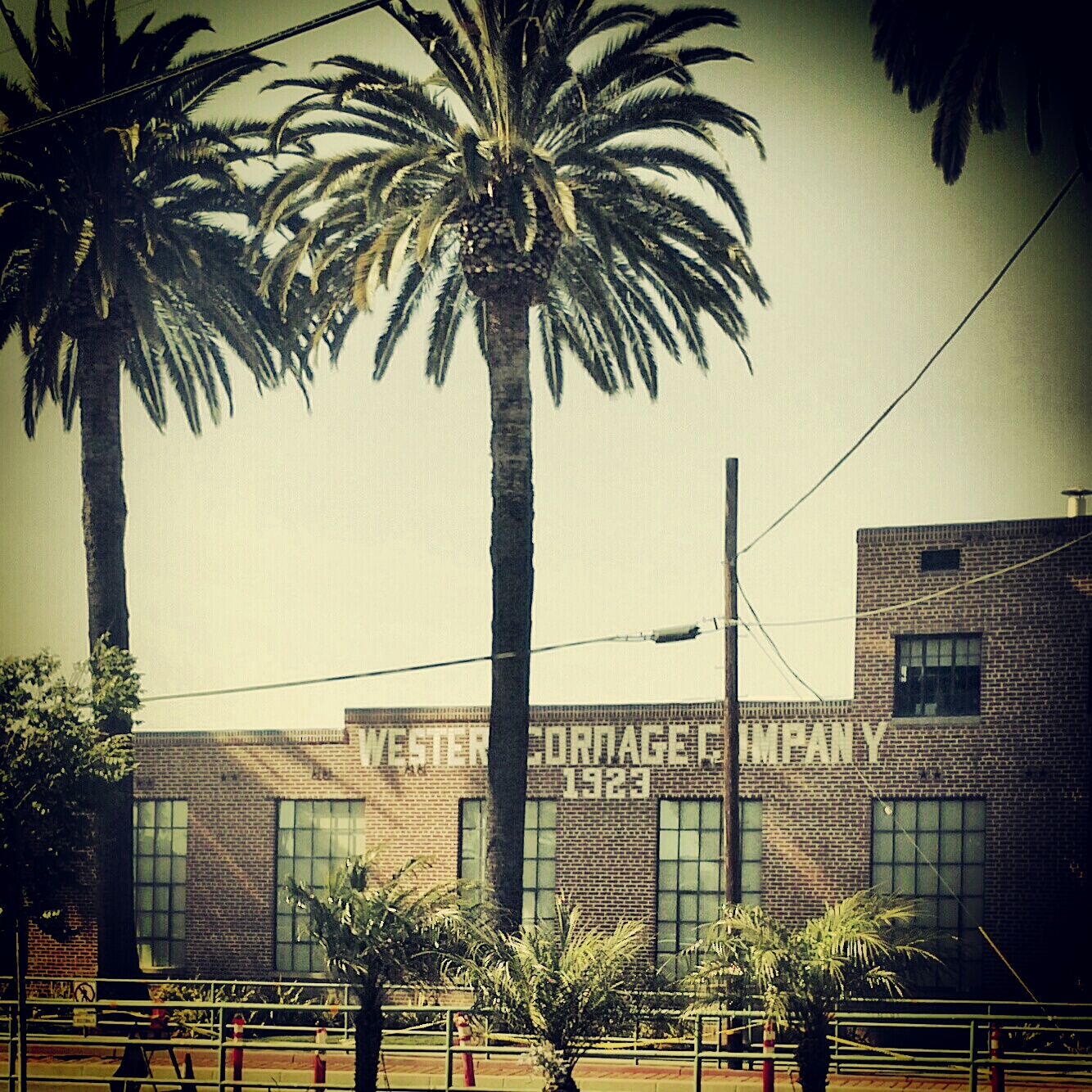
IMG_20130410_161102 (1)

White Envelope:

He was waiting outside for me in a pool of streetlight as I walked out of the Times building: a tall drink of water in a pinstriped suit, fedora perched cockeyed across his forehead.  He stepped out of the light toward me.  The pool of yellow slid off his shoulders like water, and I felt that there was something so familiar about this man.

“You’re Joyce Cummings,” he said.

“I’m tired, is what I am,” I said.  I tucked my purse under my shoulder, pulled on my gloves and tried not to feel the weariness of the press conference this morning; the mayor in behind the podium, teetering in the heat until he collapsed on the stage.  The feedback of the microphone as it fell.  The frantic hours afterward on the phone to the hospital, begging for news.

“Well I’m Glenn Baker, and I’m a fan.” He stuck out his hand, “The work you did on the ‘32 Summer Olympics was art.”

I placed my gloved hand in his, and we shook.  “Thank you very much,” I said, and smiled.

“Let me take you for a drink?” he asked.

I tipped my head back to look at him and realized that, even in heels, the top of my curled coif only came to his chin.  His eyes were deep as a glass of whiskey, and the pinstripes of his pants hugged him well.

“Why don’t you take me out for a drink,” I said. Maybe if he hadn’t had that Hollywood smile I wouldn’t have said it.

“I know a place just down the street from here.”

“Then lead the way, Mr. Baker.”

The sign out front said The Florentine, and it was swanky inside.  A bar full of glass bottles lined the left wall and tiny, leather booths the right.  Chandeliers hung over each table, their light reflected in the mirrored walls behind them.  Gold drapes swished over every door, and clouds of cigarette smoke billowed. The place was packed with men in suits. A few women in tight dresses and too much makeup speckled the crowd, giggling over their drinks.  In the dim light, a jazz combo began to play something slow.

“I’m underdressed,” I said over the noise, looking down at my brown tweed skirt.

“You’re perfect,” he said.  “There’s a table in the back, follow me.”

We picked our way through the crowd to a booth in the corner.  It was quieter there.  I tucked my purse and hat next to my feet.  When I looked up, a girl in a low cut cocktail dress appeared at the edge of our table.

“What can I get you, Mr. – ” she said.

“– I’ll have a Gibson,” he broke in, “and the lady will have…”

“The lady will have the same,” I said.

Baker raised his eyebrow.

“I’ve been tossing them back with the newspaper boys for longer than you’d imagine,” I said.  “I’m used to being the only skirt in a room full of pants.  Now let’s cut to it.  Why did you really ask me out tonight?”

“I told you, I’m a fan,” he said.

I shook my head. “Nobody’s just a fan.  Maybe you liked my picture too.  Or maybe you think I have information about something and you want it.  Sure, you’re a fan.  But regular fans don’t show up at the office and ask to take a girl out.”

“So I’m not a regular fan,” he said.

“Then what kind of a fan are you?”

“The needy kind, I guess.” He rubbed the back of his neck.  “Listen, Miss Cummings, you’re right.  I like your work, but I’m also in trouble.  You seemed like the kind of woman who would be willing to help a guy.”

“I’m better at getting myself into trouble than getting others out of it,” I said.

“Look, I didn’t want to do things this way.  Let’s have a nice night, and then you can come back to my place and I’ll explain it all.”

I looked at the concerned crease between his eyes, and at his broad shoulders.  I leaned forward.  “I believe the standard currency for coming back to your place is dinner and a movie.  We can have a nice night, but you’d better tell me here.”

“I didn’t mean…” he said.

“Of course you didn’t, you just weren’t thinking.” I put my hand on his.  “Listen, don’t worry Mr. Baker.  Just tell me, what is it you want to talk about?”

“I don’t know.  I guess let’s talk about you.”

I laughed “I’m not very interesting I’m afraid.  Been wedded to work for years.  I don’t do anything unless there’s a story involved. Men don’t like that very much, so I assume you’re the same.”

“Where did you grow up?” he asked.

“Boring little town thirty miles east of here.  Nothing but orange groves and packing houses for miles,” I said.  “I left as soon as I could, and there’s no story there.  New subject.  Where did you grow up?”

“I guess I’d rather not talk about it,” he said.

The waitress arrived with our drinks.  She placed two martini glasses on the table, and winked at Baker. “You all just let me know if you need anything else!” she said as she turned on her heels and disappeared back into the crowd.

“Look Mr. Baker,” I said, “It’s loud in here.  The sooner you tell me what’s on your mind, the sooner you can stop worrying.  No one will overhear in this din.”

Baker grasped the base of his glass twice, and then raised it to his lips and drank.  The glass wobbled as he set it back on the table.  “I hardly know where to start,” he said.

“Wherever you’d like,” I replied.  The sweet aroma of a good story hung thick in the air. I could taste it.

“I guess it all started with Ida,” he said, “or rather, it started when Ida and I ended, and I found out how many debts she had racked up.” He took another sip from his drink.  “She had to have that mink coat, y’know, and the fancy dinners all over town.  And the gilded hotel rooms she visited with other men.  I thought we were in love, but she just up and left me with the bills one morning and it was then I saw who she was.  Pretty clear.  But by then I was up to my neck. I borrowed the money to pay the debts from people I shouldn’t have. It was the worst mistake of my life.”

I waited, watching the condensation gather on my glass.

“I have money now, plenty of it,” he continued, “but they won’t let me pay.  I’ve been performing little tasks for them for years.  Acquiring things. You know what I’m saying?”

“And where do I come in?” I said.

“You have my final payment.  At least, that’s what they said.  I don’t know how they would know.  A little white envelope the Mayor handed you this afternoon.”

A shot of adrenaline rushed through my veins like iced gin.  The sweltering heat of the afternoon; the Mayor collapsing on the hot pavement, foam gurgling from his mouth.  In the chaos, I was sure no one had seen me tuck the white envelope into my own jacket.  I didn’t tell anyone I had it.  I learned a long time ago not to let anyone know what you’ve got until the story is written.  They’ll just pat you on the head, call you darling, and suggest that it’s too dangerous.  Billy should take it from here.  I don’t know how Baker knew anything about the envelope.

“Who are ‘they’?” I asked.

“I don’t know.  If I knew, maybe I’d be outta this mess.”

“And what’s in the envelope?”

“I was hoping you could tell me,” he said.

“Presuming I have it.”

“Well, yes.  Presuming you have it.”

“And presuming I’ve opened it, too.”

He cleared his throat.  “Well yes, that too.”

“I can’t help you,” I said.

He downed the rest of his drink in a single gulp and winced. “Yes, I thought you might say that.  I’m afraid I don’t have anything clever worked out in response.  Look, Miss Cummings, it’s a matter of life and death for me.  These guys don’t play around, and if I don’t cough up the envelope they’ll take it out of my flesh instead.  I’m not asking you to hand over the envelope this second.  I’m not even asking if you have it.  I’m just asking you not to refuse me help until you’ve thought it over.”

“I’m sorry, Mr. Baker, you seem like a nice enough fellow,” I said.  I swirled the straw around in my drink. “But I can’t help you unless you help me.”

“Help you how?” he said.

I leaned forward. “The envelope is in code; a jumble of nonsense words.  I can’t read it.  I need a scoop to bring to the boys at the office.  I haven’t had a juicy one in months.  You get me the code, the letter is yours.”

A faint clapping filled the bar as the jazz combo switched to a new song.  I watched the surge of people moving through the bar.  Men breathed plumes of smoke into the air.  One held cigarette and high ball in the same hand, to wrap the other around a girl’s waist and whisper in her ear.  Serving girls distributed sloshing glasses of alcohol throughout the room.  Light glinted off the saxophone as the performers swayed to their music.

“Pardon, then.  I should have known,” he said.

“Known what?” I asked.

“I recognized that look in your eye right away, the cold behind your baby blues. As soon as you get what you need from me, you’ll leave me twisting, Doll.”

“I’m sorry Mr. Baker,” I shrugged.

“You’re not sorry,” he hissed.  “Lies don’t become you, Miss Cummings.”

I took a gulp of my drink.  It was sour as it trickled down my throat.

He laughed, dry and mirthless.  “You have me trapped just where you want me.  But I’ll be damned before I just hand it over.  If I get you the code, you produce the letter, and we translate it together.”

I took another sip from the martini glass before I reached into my purse and pulled out a slender cigarette.  I brought it to my lips.  He found a lighter in his pocket, and held the flame.  I pulled the smoke into my lungs and let it out in a slim, curling tendril.

I thought of the envelope tucked into the front of my jacket pocket. It would be so easy to lift it out and hand it to him, to forget I ever saw it.  He sat slumped in the booth beside me, lines creasing his handsome face, staring into the distance.  He swallowed hard.

I stabbed the end of the cigarette into my drink, and picked up my purse and hat.  “I should be going.  Walk me out?”

“Whatever you say, Miss Cummings,” he said.  He dropped some money on the table and we picked our way out of the crowded bar.  The night had turned cool, a crisp breeze pushing aside the heat of the day.

“Look,” he said, “Don’t go home angry.  I got a little hot in there, I’m a heel.” He grabbed my hand and I let him take it.

“You are most definitely a heel,” I said, “and you were probably right. About all of it.”

We walked a ways down the street to a row of apartments. It was quiet and the moon was bright.  A car drove past, and the headlights made the world of shadows spin around us.  We stopped walking.

“You’re beautiful, Joyce, you know that?” he whispered, pushing a curl away from my cheek.  He kissed my cheek, and his lips were soft.  The blood rushed in my ears.  My heart hammered.  I was alive.

It seemed like ages had passed when he pulled away, but it was only seconds.  He cleared his throat and rubbed the back of his neck.  “I shouldn’t have…”

“Let’s stop with the apologies,” I said.  “You know what I want from you .  Code for letter.  Best of luck, Mr. Baker.”  I walked away, feeling the light of the streetlight slip over my shoulders this time.  I knew that if I had been a different girl, that kiss might have melted me.   Still, something in me wanted to grip that letter tighter than the mayor had.

#

            He looked better than I remembered when he slid out of the shadows again later that week, and that air of deep familiarity struck me again.  There was a cut across his cheekbone now, and it gave him a rakish air that fit with his easy manner.

I smiled.  “I presume this means…”

“I have what you asked me for,” he said.

“Mr. Baker, you are my hero,” I said.  He had delivered on his promise.

“And if you have the letter with you, then you’re mine.  I don’t think I have much time and I might have been followed.  We can’t go back to the bar.  We have to go somewhere else, somewhere not public.  I know you said you wouldn’t come back to my place…” he trailed off.

I couldn’t invite him into the news room.  Not until I had the story wrapped up, with my name on the byline.  “We’ll go to my apartment,” I said.

We strode over the sidewalk together, headlights of cars wheeling past and casting circling shadows through the night.   I turned the key on the wooden door as he waited in the palm tree covered courtyard.  We stepped into my stark living room; only a bookshelf, a yellow floral couch, and a bare wooden table to break up the white stucco walls.  I tossed my things on the table and turned to Baker.

“Well,” he said, “you said you had it.”

“You first.”

He pulled a receipt from his hip pocket.  Black scrawl covered the back of it.

I reached into the inside of my coat.  The white envelope glowed in the darkness between us.  The letter crinkled as I unfolded it.  I spread it on the kitchen table and began to translate.

“Evidence that Franco Bianchi’s gang is blackmailing the city council is taped to the bottom drawer in my office.  Don’t tell the police, they’re on his side.” it said.

I closed my notebook and stood.  This was bigger than anything I’d ever had before, and the filing deadline for the paper was early.  I grabbed my hat and gloves absently, and walked toward the door.

“I have to get back to the office,” I said.

“Miss Cummings,” Baker said, and I turned.  “My envelope?”

I held it out to him.  My thumb and finger gripped it where the prints of the mayor had crinkled the corner.

He took the envelope from my hand as if it would shatter at the slightest touch.  A slow smile spread across his face.  The creases in his forehead smoothed.  He tucked it into the inner pocket of his own jacket.

When he removed his hand from the pocket, it was not empty.  Something glinted silver in the moonlight, and I saw that it was a small pistol with a wooden handle.

“Mr. Baker,” I said.  I grabbed the back of one of the ladder back chairs, moving my body behind the thin rails.  It would be no shield at all, I realized.

“If I’m going to kill you, we should be on a first name basis.  Don’t you think, Joyce?”

The silence filled my apartment.  My mouth was dry and I swallowed.  The back door was behind him.  The front door was too far to outrun a practiced trigger finger and a slick silver bullet.  I stood, still and tall.

“Fine, Glenn,” I said.  I willed my voice not to waver.

“Most people call me Franco,” he said.

In that instant in my living room I realized where I knew him; in the dim light, I saw his face as it appeared in the black and white pages of the paper.

“Franco Bianchi,” I whispered.

“You really are beautiful, Doll,” he said, “but I can’t have any witnesses, especially not witnesses from the press.  And I can’t let you write that story about the mayor.”

He pushed down the brim of his hat and fired.  The world spun, and my back hit the slick wood of the apartment floor.  I thought of the mayor and the way he toppled from the podium.  There was no one to rush to my side here, no one I could give a small white envelope.  The story would die with me.  I had been a fool, too eager for a byline and too trusting of familiarity.  Something warm, dark, and sticky seeped through my tweed jacket and into my hair.  I had tried to be the hard boiled reporter, and in the end I was still nothing but an easy mark.  The sound of the lock clicked and I realized I was alone.  I stared at the pattern of swirling stucco on the ceiling, watching the pattern fade and focus, and then fade out again.


Categories: Fiction | Tags: , , , , , | Leave a comment

Happy New Year

IMG_20140101_171852

I had meant to write a blog post filled with optimism.  “It’s a new year with no mistakes in it yet,” I wrote for the first sentence.  I was asking for it, loud and clear.  So far, this year has been riddled with mistakes.

We celebrated the new year at a friend’s house, playing Cards Against Humanity while we ignored Ferris Beuler’s Day Off playing in the background, lounging and laughing.  “Happy New Year!” we all yelled as we watched the ball drop in Times Square on the television.  I leaned in toward Brian for the traditional kiss.  I took a step closer.  I squished his bare toes with my sharp pointy flats.

“Ouch,” he said.

“Sorry,” I replied.

At that point, the new year was 50% mistake.

Brian and I thought we would like an adventure on our last day off, so we bundled ourselves in the car and went to LACMA.  I specifically checked the website for holiday hours.  It said they would be closed on the 31st, but it didn’t say anything about New Year’s Day.  In my quest for holiday hours, I missed the gigantic banner at the top that said “closed Wednesdays.”  I found it in all its bright, pixilated glory when we returned home.  The empty parking structure should have tipped me off, but it wasn’t until the security guard at the entrance stopped us that I realized.

“Is the Tar Pits open?” I asked.  Plan B

“Maybe, I don’t know,” he said.  “You can check.”

So we checked.  It wasn’t.

The LA Farmer’s Market (oldest farmer’s market in the US, they proudly proclaim) is a few blocks away.  We walked there, and they were open.  We had blueberry pie at a diner that was the best I’ve ever had – buttery crust and berries that burst as I chewed amid the sweet, dark filling.  I bought a teapot and some loose-leaf Imperial Earl Gray at one of the shops.  Not the regular kind, the Imperial kind.  And then we walked back to the car, drove home, and fell into bed.

This morning I packed a lunch in a large Trader Joe’s bag, brown paper with convenient handles.  It was a tasty one.  Fusilli pasta in basil with fresh cherry tomatoes, popcorn, and a Honey Crisp apple.  Dried cocoanut strips as a snack.  I got to work and realized that it’s still on the floor of my living room.  Evidently, I’ll be buying lunch today.  I have little hope that cats won’t eat all the popcorn before I can get home tonight.  Sigh.

In short, this year has been nothing but mistakes so far.  I suppose that’s what I get for writing that fate-tempting sentence.  There is something so tantalizing about the promise of the new year, though.  The unflinching optimism that this year, surely, will be better than the one that just passed.  Maybe it will even be the best one yet.  The evidence might be for the contrary and still I persist in thinking I can make better the reality; when the reality is, who knows?

Categories: Life, Uncategorized | Tags: , , , , , , , , , | 2 Comments

Thoughts on a trip to the Huntington

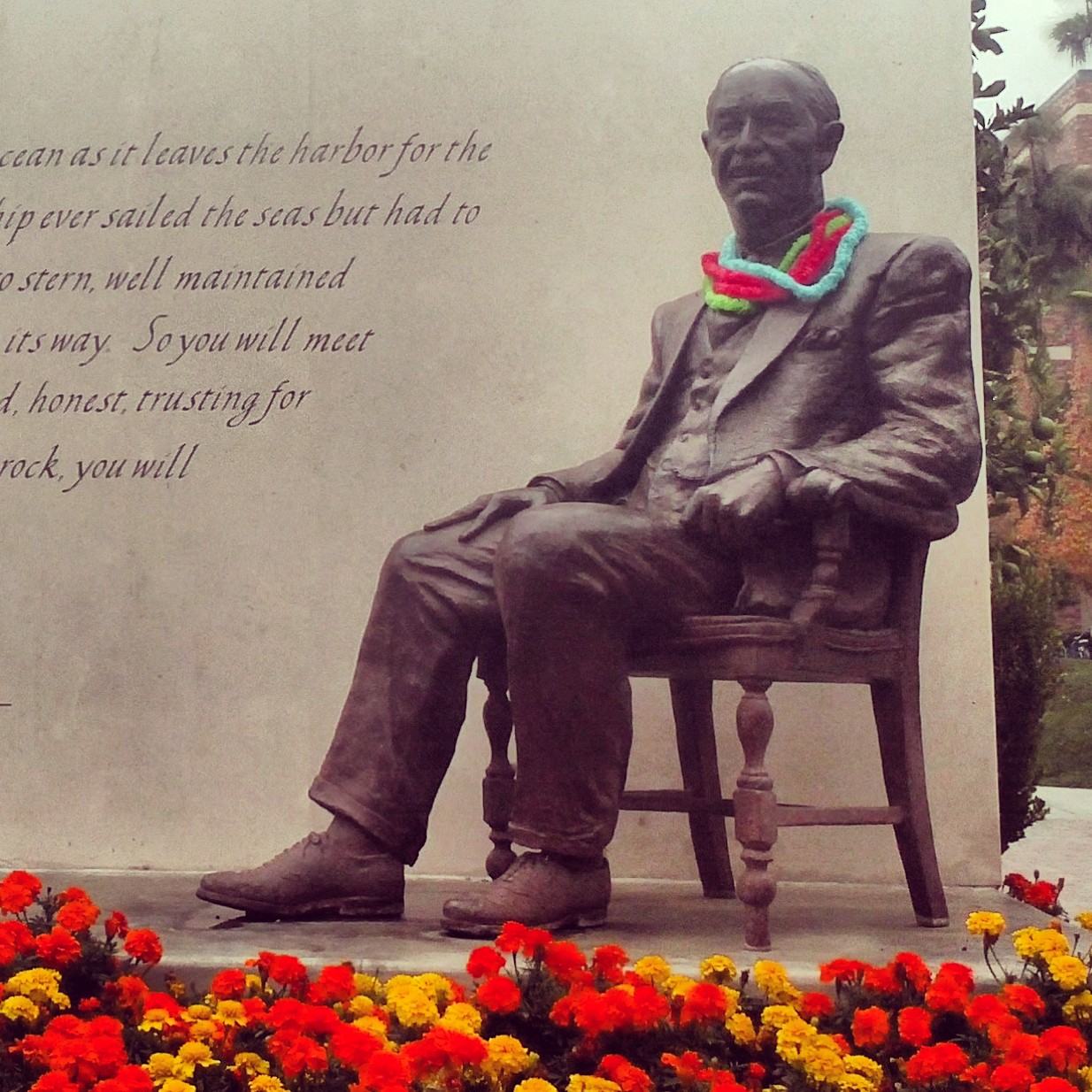
1001771_676603392365451_1703673329_n

I grew up going to the Huntington Library often.  My mother was a stay-at-home-mom, and she had it all figured out.  On days when we were insufferable and cranky, she would bundle my sister and I in the car, take us someplace beautiful and open,  and let us run ourselves ragged.  She could then enjoy our mellow exhaustion for the rest of the evening.  I developed a collection of wax animals from the LA Zoo and perfected my peacock call at the LA Arboretum.  I learned at the Huntingtonin a flurry of tickling grass blades and green stains that if you roll yourself down a long enough hill, you start to go crooked.

When I was older, we would go on the weekends and stop at the exhibit hall where Audubon birds gazed from the walls and illuminated manuscripts peaked from glass cases.  I mostly found it boring.  I wanted to get to the Japanese garden with the gong and the delectable arched bridge.

“Look, it’s the Gutenberg Bible,” my mother would say.

“Uh huh,” I replied.

“It was the first book ever printed on a printing press.”

“Yup.”

It didn’t look like anything special to me.  I was an avid reader and had seen hundreds of thousands of printed pages.  The letters on the Gutenberg Bible looked just the same as those.  I didn’t understand what the big deal was, other than the fact that it was old.

I took a medieval history class at Chapman two years ago.  I don’t know what it was about that class, but so much of it made me see the world differently.  The water was unsafe to drink back then, and disease was rampant.  The known world was being run by drunk twenty year olds.  Picture the guys of Jackass empowered to run a nation.  Doesn’t the medieval world make so much more sense now?  It also gives me hope for the future.  I mean, humanity survived that and went on to flourish.  Our political system may be gridlocked, but at least drunk and reckless with a side of murder isn’t an admirable trait in a world leader anymore.

And then there was the Gutenberg Bible.  Suddenly, I got it.  I understood why it was amazing and I fully appreciated its beauty.  It was made using a modified fruit press in a time when people thought disease was spread by gaze.  The ink was a combination of soot, wax, and squid ink.  It has lasted hundreds of years. The thing that left me so unimpressed before is what makes me so fascinated today.  The edges of the letters are crisp.  The letters are black.  It looks like it could have been printed yesterday.  It was printed in a time so far removed from me that I cannot fathom it.  It blows my mind.  I could stare at the two pages behind the vast Plexiglas case for hours in the Huntington’s gallery, marveling at each contour of the letters, perfect and crisp, wondering whose hands have touched it in the hundreds of years since it was bound.

The printing press changed the world.  I think of this every time I stare at those perfect pages.  Instead of one copy of things that took years to create, suddenly there were hundreds that could be disseminated across the world.  Catholic heresies spread faster than the church could stamp them out and Protestantism was born.  Scientists in different parts of the world could now compare their volumes of Aristotle’s works and see that the reason the math did not add up was not a scribe’s error, but an error in the theory itself.  Advancements in science and technology followed like wildfire on dry grass.  The catalyst for all of it stands there in its case, its perfect lettering still black.

“Look, it’s the Gutenberg Bible,” I say to my husband.

“Uh huh,” he says.

“It’s just so perfect.”

“Yup.”

So I tear myself away and we move out to the gardens, which are almost as impressive.

Categories: History, Life | Tags: , , , , , | Leave a comment

Fall Reading List

IMG_20131101_075528

In the interests of being fair to summer, I’m posting my Fall reading list complete with short review of everything I read.  I know it’s December now and WAY past Fall, but the fall semester just ended here, so I consider myself legit.  Also, books make GREAT Christmas presents and there’s still time to order stuff from Amazon.  Barely.  I should really get on that…

So anyway, here’s everything I’ve read since the semester started in late August:

  1. The Hero and The Crown – Robin McKinley (I’ve read about gals that I want to be, but never that I wanted to watch like I want to watch Aerin.  Fascinating main character, kick ass story.)
  2. Chalice – Robin McKinley (I just want to move into this world and tend bees.  Can I?)
  3. The 4:50 From Paddington – Agatha Christie (Just as I’m certain, CERTAIN, I know who did it, it turns out to be someone I didn’t want to consider.)
  4. The Name of The Wind – Patrick Rothfuss (Although well written, it reads like a D&D campaign.  I prefer to play them, not read about them.  The writing is such that I’ll finish, though.)
  5. Percy Jackson and the Lightening Thief – Rick Riorden (This reminded me a lot of Going Bovine, but Going Bovine was much better written.  Not bad, not the best of its kind.)
  6. The Big Drop: Homecoming – Ryan Gattis (Nods to Chandler and Fante, but is totally its own thing.  The best argument for character driven narrative I’ve ever read.)
  7. Let’s Pretend This Never Happened – Jenny Lawson (Reads just like her blog, which I can’t read in public because I can’t stop laughing in inappropriate ways.)
  8. Midnight In Austenland – Shannon Hale (A re-read.  For the third time.  This is likely to become one of those books I can’t read anymore because I’ve memorized too much of it.)
  9. Kneenock Rise – Natalie Babbit (My favorite in fourth grade. It goes too fast now, but reading it out loud helps, and also made me notice her foreshadowing and savor her word choice.)
  10. Story Book High, Book 1 – Shannon Hale (yes, I know… a book produced by Mattel?  But Shannon Hale.  I was torn.  It wasn’t bad.  At times it was even hilarious, if you like puns. I do.)
  11. Aunt Maria – Diana Wynne Jones (You read, and you think ‘what the hell is happening?’ but all parts fall into place by the end.  This is why I love her. Also, because Aunt Maria is creepy.)
  12. Self Reliance – Ralph Waldo Emerson (This “updated” version is really reduced to a quaint quote book by the new stuff interspersed between Emerson’s essays. Doesn’t do him justice.)
  13. The Wave in the Mind – Ursula K. LeGuin (I loved her essays on growing up in 1930’s California and on reading, and then I read her essays on rhythm in writing and fell in love more.)
  14. Fortunately, The Milk – Neil Gaiman (Wumpires and a time-traveling stegosaurus?  Yes please.)
  15. Let’s Get Visible – David Gaughran (Because I’m thinking of self-publishing.  Still undecided…)
  16. Johnny Tremain – Esther Forbes (In the beginning Johnny is an asshat, and in the end he’s a sap, but between is good.  Plot is very coincidental, though.)
  17. The Things They Carried – Tim O’Brien (So well written, and just full of the fear of war.)
  18. Persuasion – Jane Austen (A re-read, and a book I love.)
  19. Author, Publisher, Entrepreneur – Guy Kawasaki and Shawn Welch (This is the book that made me decide NOT to self-publish.  I’m not that cool.  I don’t have the mad skillzorz it would take to do it well.  I suppose it’s good that I found this out early.)
  20. Helen of Pasadena – Lian Dolan (total smut in the best way, and extra fun because I know some of the main locations.)
  21. The Kings and Queens of Roam – Daniel Wallace (Heartbreaking and fable-like.  It’s beautiful, but I’m not sure I’ll finish it.  I’m not sure I can take it.)
  22. Candyfreak – Steve Almond (I think I might be in love with this man… mostly because he’s even more of a sugar freak than I am, but also because he’s hilarious.  Don’t tell Brian – although he probably suspects.  I’ve been reading him snippets of the book for days.)

I also just bought Consider The Lobster and Elizabeth the First Wife, but I’ll finish those after the requisite deadline for reporting what I’ve read.  Those will be the first on the Winter Interterm reading list.  I’m very excited, especially about Elizabeth the First Wife which promises to be extra smutty.

Categories: Fiction, Writing | Tags: , , , , , , , , , , , , , , , , , , | Leave a comment

Tesseract Pearls

IMG_20130519_102019

I have been a very sick kid the last week and a half now.  It started with me just feeling a little under the weather, and then I had a work event full of insanity lasting two nights long.  I barely ate and spent the night running around in the cold in a cocktail dress.  Then, I spent the next four days in bed.  I am clearly not in my twenties any longer.  That is what I told Brian as I groaned in agony on the pile of laundry next to the bed because I didn’t have enough strength to get in again after going to the bathroom.

I have a thing about doctors.  I refuse to go unless I’m certain that I’m outright dying and about to leave Brian with a sad legacy of horrific sink dishes and student loan debt.  I explain this so that when I say I went to the doctor, you know how bad I was feeling.  I needn’t have bothered.  They basically called me a drama queen and sent me home with a medication called “Tessalon Pearls” to help with the coughing.

“You work, so I’ll have to prescribe you something that doesn’t make you drowsy,” said the doctor.

“Thank you,” I said.

I picked up the bottle from the pharmacist and it said “Warning: may cause drowsiness.  Do not drive or operate heavy machinery until you know how this medication will affect you.” Oh the irony.  Luckily, it doesn’t make me drowsy.  The doctor knew what he was doing after all.

I took the bottle home.  They look like really tiny oil capsules.

“They prescribed me something called ‘Tessalon Pearls,’” I told Brian.

“So basically you’re telling me that your lungs are non-stick now?”

“Yes,” I said.

“No, see I was being funny,” Brian explained.  “Your line is: ‘it’s Tessalon, not Teflon.’”

“But yours is so much better,” I said.  “Let’s pretend my lungs are non-stick.  Either that or we can call them ‘Tessaract Pearls.’”

“What is a Tesseract?”

“It’s from A Wrinkle In Time.  In fact, a Tesseract is a wrinkle in time, a jump.  This means that I was just proscribed time travel pills.  Let’s go with that.  MUCH better than non-stick.”

“Uh… sure,” said Brian.

So basically, this post is to say that if you need me, I’ll be fighting dinosaurs on a spaceship far in the future.  You know, until the pills run out.

Categories: Life | Tags: , , , , , , | Leave a comment

Ordeals

It seems so odd that I’ve been writing enough to make 100 posts, but this one is the 100th, so happy milestone to us, and thanks for reading!

I’ve recently decided to apply to grad school for creative writing and in honor of that, and of the 100th post, I’m posting one of the pieces I’m considering turning in for my 25 pages worth of writing sample.  I went from having nothing at all to having a lot of potential things that could go, and I’m having trouble deciding.   I’m trying to show range, and honesty, and good story, and still make the pieces the kind of thing I usually do.  It’s hard.  I’ve picked four, and I’ll let my family help me narrow it down to three.  This is one of the four.  I hope you enjoy!

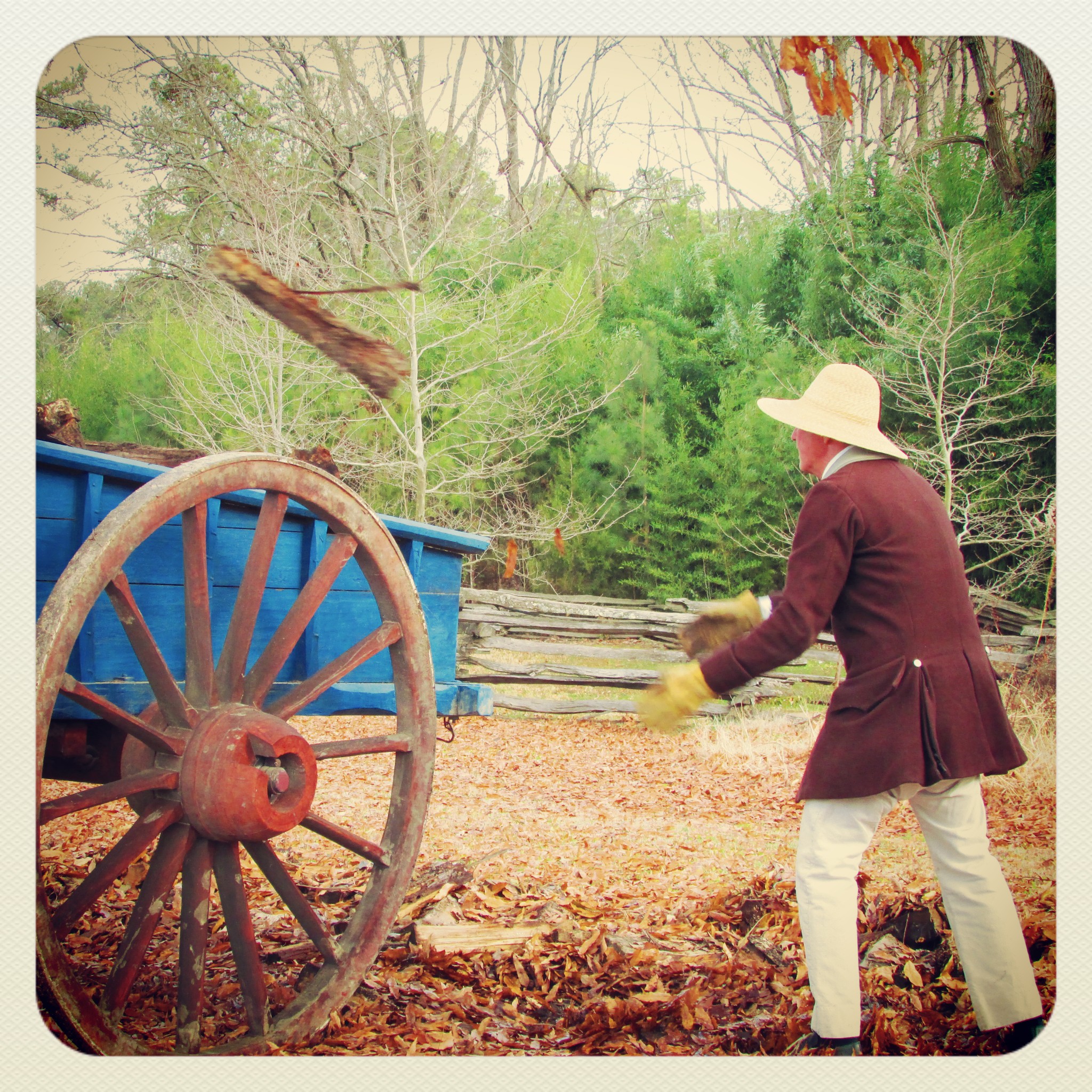
Williamsburg

Ordeals

            The wound is guaranteed to be extra juicy this time,” said Rutherford’s wife over the breakfast table.  “I just love a water ordeal.”

A flicker of flame from the open hearth silhouetted her hair in a frizzy halo around her white cap in the dim wattle and daub cottage.  Rutherford’s stomach lurched.

“I can’t stand Ordeals.  You know that,” he said.  “The way they poke at the festering wound and deliberate for hours sometimes, looking at it.  I mean, I know God is supposed to be speaking through how much the wound is healing and telling us whether the offender is guilty or not, but I just can’t stomach it.  Wounds are the most disgusting things.”

“I should knock some sense into you with my ladle, Fordy,” Gertrude said.  “It’s blasphemous to not like Ordeals, I tell you.  I mean, how else are we to know if someone is guilty or not?” she rubbed her hands together and smiled.  “I for one can’t wait to see if that Crispus Hode is guilty,” she said.  “I’ve suspected he was no good for a long time.  I heard tell he was born on a Friday, and if that’s true it’s no wonder that he grew up to be a no-account thief, taking Odo Black’s perfectly good hog and eating it for dinner.  You know what they say about Friday babes.  I mean, I suppose you have to raise them as best you can, but there will always be the devil’s streak in ‘em, and no telling when it will manifest.”  She shook her head.  “When they held his hand in that boiling water two weeks ago, you could hear Crispus shriek clear across the village, you remember.  Extra juicy this time,” she smiled

Rutherford felt his stomach churn and he dropped his porridge spoon into his bowl.  He swallowed.  “I know you enjoy these things but I’d rather not talk about it, Gerkins,” he said.  He wiped his mouth with the sleeve of his tunic.

“Well, that’s fine,” she said. “I’ll tell you one thing I can’t wait to see.  They’re picking the new head of the Witan town council at this meeting.  How long have you been on the Witan?  Ten years?  You’re the oldest of the group now, too, aren’t you?  I mean what with old Robin Miller croaking at the harvest festival and all… that was a disgrace, it was.  Face down in the pudding.”

“I’m the oldest,” Rutherford interrupted, “but I wouldn’t keep your hopes up.  No one in his right mind would make me the head of the Witan.  I just don’t have the stomach for it.  If I can’t talk about Ordeals, what makes you think I can govern one?”

“And who said anyone in this village was in his right mind?” Gertrude cackled.  “You sure are funny sometimes, Fordy.  I’ll bet you’ll be nominated for sure.  Eat your bacon, and then we’ll get to the church.  I just love a water ordeal.”

Rutherford sat in the first pew of the church with the rest of the Witan – eleven other men just as grizzled and portly as himself.  The rest of the town packed into the church behind them, leaning forward to get a better look as Burt Cooper, the current head of the Witan, unwrapped the linen bandage from Crispus’s hand.  Crispus winced as the bandage stuck and Burt gave a pull, dislodging it from the dried puss on Crispus’s wrist.  Rutherford felt the bile rise in his throat, and forced himself to focus on the floor.  There was a knot in the pine board near his toe.

The crowd gasped and oh-ed.  Crispus cried out in pain.

Silence fell across the hall, and a sticky, wet sound filled the room.

“Humuhuhnm…” moaned Crispus.  Rutherford gritted his teeth.  If only the sticky sound would stop, he might be able to bear the rest.

Rutherford felt a nudge in his side.  “Open your eyes, man.  What say you to that boil there?  Does the puss make the sign of the cross?”

“It looks more like a dog to me,” another chimed in.

“It is categorically a full moon over the rowan tree,” said another.

“Well, I’m seeing a sickle.”

The group huddled and argued.

“Oh for God’s sake,” said Rutherford, his eyes still closed.  “Just make a decision.”

“Attention all” Burt cried at last, his voice echoing in the rafters.  “I proclaim Crispus Hode not guilty under trial of Ordeal. The burn has categorically healed some.”

The crowd let out a general sigh of disappointment.  Now there would be no fine levied against Crispus.  The fun was over.

Rutherford looked up.  In the colored light of the stained glass windows, Crispus was wrapping the bandage around his hand again, wincing as the linen touched his burn.

Burt continued, “And now, as it is the 23th of March and my duty shall be over in two days’ time, the village’ll choose another head from among the twelve men of the Witan.  Happy New Year to ye all.  I would like to nominate Rutherford Thompson to take my place, but the council will hear all nominations.  What names do ye put forth?”

Sounds of people rustling, moving in their seats, filled the church.  Someone in the back sneezed.  No one spoke.

“Anyone?” said Burt.

A shout arose from the back of the crowd.  “I second the nomination!”

“Second who’s nomination?” a voice shouted back.

“What about Fiscus Walter?” another yelled.

“I third Rutherford!”

“No one’s seconded him yet.”

“Then I second Rutherford.”

“And I third Rutherford!”

It only took a few minutes for the crowd to solidify.  “Rutherford! Rutherford! Rutherford!” they chanted.

Rutherford felt his heart warm in his chest as he listed to the town chant his name.  It was unexpected that they revered his wisdom so much.  His doubts melted in the warmth of his chest.  He could see it now: himself sitting in the grand wooden chair on the church dais, meting out wise advice to the confused villagers; tending to the extra strip of field allotted to the head of the Witan; being the most important person in town, his benevolence renowned.  He rose to face them, looked at their expectant faces, and felt power course through his veins as he raised his arms and the crowd went silent.

“I, I mean… I, well yes,” he said, and listened as his voice bounced off the rafters of the church as if they were important and decisive.  The crowd cheered. Rutherford felt Burt slap him on the shoulder.

“Congratulations,” Burt said with a grin, shaking Rutherford’s hand.

Rutherford grinned back, pumping his fist up and down.  “Thank you.”

It was not until the uncomfortable hour of midnight that Rutherford realized what he had done.  He sat awake in his curtained bed, Gertrude snoring beside him, and stared at the ceiling in panic.  As head of the Witan, he was now in charge of administering Ordeals.  Every festering wound he had ever seen rushed into his mind in the darkness, wet with pus and boils, oozing blood from between the crevices of a scab, streaked white and smelling noxious.  It was his job to hold a hand in boiling water while the offender screamed.  It was his job to poke through the festering wound two weeks later and make a decree.   His stomach churned and the saliva gathered in his mouth.  He would make a fool of himself in front of the entire town.

There was only one thing to do.  If Rutherford prayed hard enough, maybe he could avoid ordeals entirely.  He would keep his head down, pray for no breaches of law, and get out of office as soon as plausibility allowed.  Everything would be OK.   One term as head of the Witan was respectable.  Visions of mutilations rose in his head again, but he forced them out.  Everything would be OK, he repeated to himself.  If he kept calm, he would get through it.  Not every Witan had to administer an ordeal.  It would all end up alright.

It was not alright.

The night was crisp and sharp as Rutherford sucked the air into his lungs.  The needles on the trees that surrounded the village were extra green in the fading light and the lingering quiet of the countryside was broken only by the sound of the crickets chirping somewhere near the woods.  The corners of the thatched, wattle and daub huts showed as sharp as the air against the cold landscape.  As the sky darkened to indigo, even the twinkling stars that poked through the sky seemed more clear than usual.  Rutherford picked up the wooden bucket from beside his front door and went outside to milk his cow.

The quiet evening was interrupted by the din of clanging pots, cowbells, tools. Metal on metal rang through the night.  Voices followed, shouting “Beware! Thief!”  Rutherford dropped his bucket and put his forehead into his hands.  The Hue and Cry meant there would be a trial for sure.  Why? he asked the heavens.

The heavens did not answer.

Rutherford picked up his bucket again, and went back into the house.  There was no sense in milking Bessie now.  On his way, he ran into Sampson Hode and Fiscus Walter.  Sampson carried a rope and Fiscus had a large rock clutched in his hand.

“You going to apprehend the thief with us?” Sampson asked Rutherford.  It was the job of the entire town to catch the offender, and as head of the Witan, Rutherford’s absence would be obvious.

“I’ll be there,” Rutherford said.  “I’m just going to put this bucket in the house.  Do we know what happened yet, or what was stolen?”

“Nope.  We just heard the yelling and came out to see what was what.  I think it came from Leo Gregory’s barn, but I’m not sure,” said Fiscus.  “We’ll see you.”

Rutherford grabbed the requisite pitchfork from beside the door, dragging it behind him as he set off across the fields to the wood next to Leo Gregory’s barn.  The whole town was combing through the trees, calling, searching.  Two hours later, his feet tired and his brain sleepy, Rutherford called off the search, stood his unused pitchfork next to the barn, and climbed into bed.

Two nights later, Rutherford found himself sitting in a hard wooden chair at the front of the church.

“I do hereby accuse Mr. Leo Gregory of raising the Hue and Cry without proper cause,” said Hubert Ward.  His beard dripped down his chin practically to his navel, and Hubert’s arm got caught in the long coarse hair as he jabbed his finger in Leo’s direction.

Rutherford sighed.  How ironic that he was forced to mete out justice for a crime that wasn’t actually committed.  “Mr. Gregory,” he said,” did anyone else see the crime take place?”

Leo shook his head.  “No!  I was in the barn and I noticed that my good Scythe had gone missing.  I looked outside and saw someone running into the woods by my house, so I sent up the Hue and Cry.  I saw it, I say! I was robbed!”

“And you were alone?” asked Rutherford.

“My wife can attest to my good character,” said Leo.

“His wife’s word is as good as his own!” shouted Hubert.  “Worthless!”

“I’ll show you worthless Hubert Ward!” a woman shrieked from the pews.  Rutherford could see her rolling up her sleeves and attempting to dive from her seat.  The crowd converged on her, pushing her back down.  The room erupted into a cacophony of voices.  Rutherford stamped his foot on the wooden floor of the church.  It was no use.

“Ordeal! Ordeal! Ordeal!” the crowd chanted.

Rutherford watched Hubert place his fingers into his mouth.  A shrill whistle bit through the air and the crowd went silent.  “That’s better, ya harpies!” Hubert said, and then gestured to Rutherford.

Rutherford stood.  Every face in the crowd was eyeing him with expectation.  He cleared his throat.  “I… uh, suppose we will have to have an Ordeal.”

The crowd cheered.

Rutherford held up his hands, and the villagers went silent.  Rutherford sifted through his mind to come up with an Ordeal he could carry out without throwing up in front of the entire town. Unfortunately, all he could think of was his breakfast.  He was doomed.  “I hereby decree that Mr. Leo Gregory’s guilt will be decided upon an Ordeal of… ah… of… baking.”

“What!” Hubert shouted.

The crowd was muttering again too.

“I was hoping for Water.”

“What in heaven’s name is an Ordeal of baking?”

“Is he crazy?”

Rutherford stamped his foot on the floor again, and this time people paid attention.  “This has been divinely inspired,” Rutherford told them.  “You should not question the mysterious ways of the Lord.  This is how the process is to be carried out.  I will make a loaf of bread, but before it shall be baked, Mr. Gregory will spit into the dough.   If the dough rises and the bread is edible, he shall be considered not guilty.  If the dough should fall and the bread be corrupted, he will admit to his guilt and pay penance to the villagers for falsely raising the Hue and Cry.  So it shall be.”

The crowd paused.  Finally, the words “so it shall be,” echoed back to him in a monotone.  Rutherford’s baking ordeal had been accepted, and he grinned.  Everything would be just peachy now.

Everything was not just peachy.

Rutherford called the bread making meeting for the next morning.  All twelve members of the Witan, plus Herbert and Leo, crowded into the tiny, wooden mill just as the sun was rising over the bright green hills in the east.  The inside of the mill was streaked with yellow from sunbeams peeking through the slats of the poorly insulated walls.  One of the sunbeams fell across Rutherford’s eye, diagonally down to his opposite cheek.  He shifted, and the beam slid to his shoulder.

He cleared his throat. “We have gathered today to ask the Lord to reveal if this man before him, Leo Gregory, be guilty or innocent in his heart of hearts.  Let the countenance of the Lord shine down upon us this day and guide us in our endeavors that we may know the truth.  Amen.”

“Amen,” murmured the rest of the room.

Rutherford took a clay bowl out of the vast pocket of his belted tunic, feeling the prickly hairs on his neck stand up as he realized that everyone was watching him.  He walked to the corner of the room where burlap sacks of flour leaned against the wall, and unfolded the mouth of one of the bags.  He reached his fist into the flour and pulled out a handful.  Streams of grit fell from between his fingers, catching the light and sparkling in the morning sun as Rutherford dumped the handful into the bowl with a whuff.  He took a pinch of yeast out of a pouch in his pocket and dumped that into the bowl as well, and sifted them together.

“Someone grab me a dipper of that bucket of water over there,” Rutherford said.  The ladle full of water was passed through the crowd.  Rutherford took it carefully from the last pair of shaking hands.  He held it out to Leo.

“Spit,” he said.

“You’ll all see I’m not guilty and I’ve been robbed fair and square,” Leo said.  He gathered the moisture up in his throat with a sickening suction noise and then spat a fat loogy into the water.  Rutherford saw it floating on the surface, greenish and horrible as it bobbed in the water.  He felt the burn of bile as it rose in his throat, willed it to stop with all of his might, and then threw up his breakfast all over the flour, all over his hand, all into the water.

The crowd was silent.  They all stared unblinkingly at Rutherford and Rutherford stared back at them.  The vomit on his hand felt warm.

From the back of the room a tiny voice said, “Does this mean he’s guilty?”

“It means he’s innocent,” said another.  “We don’t need to have the Ordeal ‘cause the Ordeal ain’t gonna tell us nothin’.”

“I think it’s a clear sign that this Ordeal is stupid!” said a third.  “Water Ordeals are the way to go.  Nobody ever heard of a Baking Ordeal, and God don’t like it.”

“I say he’s innocent.”

“Guilty!”

Rutherford stood by and watched as the room began to shout at each other.  Most of them were old, grizzled men.  Their gray hair flew through the air and the loose sleeves of their tunics jumped on their arms as they gesticulated wildly at each other.  He pounded his foot on the floor for attention but it made no difference.

“Hey!” he yelled next, but his voice just mingled with the shouts of the room.

Rutherford dropped the sick filled bowl and dipper to the floor and wiped his hand off on his tunic.  He walked over to the water bucket by the front door, picked it up, and walked back.  With a swift thrusting motion, he threw it across the struggling crowd.  The water surged over them like a sheet.  They stopped abruptly mid shout, hair and clothes dripping, and turned their faces toward him.

Rutherford cleared his throat, embarrassed. “I’ll tell you what it means,” he said.  “It means that God wants Leo to have a second chance.  Leo, I hereby find you guilty of raising the Hue and Cry without cause, and order you to pay a fine to the church coffers of ten shillings.  The sentence, however, shall be suspended.  So long as you don’t commit said crime again, you will not have to pay the fine.”

“I’m not guilty,” Leo said.  “I take offense to that remark, but I suppose it’s OK if I don’t have to pay nothing.  It won’t happen again ‘cause it didn’t happen this time.”

“And it will go on the record books as guilty?” Hubert asked.

“It will go on the record books as guilty,” said Rutherford.

“Then I’m satisfied as well.”

The rest of the men in the room began to nod in assent.  One by one, they smiled.  Burt slapped Rutherford hard on the back.  “Good work, Witan,” he said.  Rutherford found that he could not smile back.

The group was meandering out of the tiny mill and onto the grass beyond.  Rutherford watched them trickle through the rough wooden doorway.

Hubert was the last to step out of the mill into the sunny morning.  Before he disappeared through the door he turned.  “Are you coming?” he asked Rutherford.

“I’m coming, I’ll be there in a minute,” Rutherford said. Hubert stepped outside and Rutherford fell onto his knees.  He thanked God for the amicable outcome and then he prayed that he would never have to assign an Ordeal again.  Then, he took a dipperful of water and rinsed out his mouth.  He felt relieved.  After all, the hard part was over now.

The hard part was not over.

Two weeks later, Rutherford found himself sitting in a hard wooden chair at the front of the church.  The rest of the town stared back at him from the pews.

“I do hereby accuse Mr. Hubert Ward of stealing my good scythe from out of my barn two weeks ago.” Leo Gregory said to the crowd.  He glowered at the bearded man on the platform with him.

The half of Hubert’s face not covered by beard was bright red.

“And what evidence have ye to present to the court that this crime took place?” Rutherford asked.

Leo walked to the platform and handed Rutherford a scythe.  The blade shined in the light from the stained glass window as Rutherford took the smooth, wooden handle.

“This is the scythe in question.” Leo said.  “It used to have my name on it, but it don’t no more.  See the bottom of the haft where it’s rougher than the rest?  It’s also shorter.  Someone sliced my name off.  I found this implement standing up outside Hubert’s barn yesterday.” Leo turned to Hubert and waved a fist at him.  “Caught in the ACT!” he said.

The crowd hissed.  “Caught in the ACT!” a few shouted.

Rutherford pounded his foot on the ground.  “He ain’t guilty yet,” he told the crowd.  He turned to Hubert.  “And what have you to say for yourself?  Do you have an alibi?”

“I don’t need no alibi,” said Hubert.  “That was the night Leo put up the Hue and Cry for no reason whatever.  The whole town saw me out there looking for the criminal myself.”  He turned to the crowd, his arms wide.  “Did you all see me holding a scythe that night?”

The audience turned to each other and began to murmur.

“Nope,”

“I don’t think so?”

“No scythe when I saw him.”

“I rest my case.” Hubert told Rutherford.

“He was kinda late on the uptake, though,” someone muttered from the crowd.

“Don’t you rest your case yet, ya burglar,” said Leo.  “I want to bring up an incident that many here may well remember.  Old John Ward, Hubert’s grandfather, was once caught with a herd of twelve sheep that didn’t belong to him, and he was regularly borrowing things and not returning them.  How many of you loaned him a hammer or even a plow blade and never saw it again?  Stealing things obviously runs in the Ward blood.  I demand for justice to be meted out!  That ought to be evidence enough for anyone.”

The villagers began to murmur again, and out of the myriad of voices a single chant began to emerge.

“Ordeal! Ordeal! Ordeal!”

Rutherford sighed, and then held up his hands.  The room went quiet.

“I suppose we will have to have an ordeal,” Rutherford said.  “It will be an ordeal of…” would they accept baking again?  What else was nonviolent?  He racked his brain.  “An ordeal of…  Um…”

“An Ordeal of Vomitus!” Hubert interjected.

“An Ordeal of Vomitus.” Rutherford declared.  “I mean… wait, what?”

“I make you spew across the church and I’m not guilty.  An Ordeal of Vomitus.” Hubert said.

“There’s precedent,” Burt shouted from the first pew.

“That’s right!” the crowd began to murmur

“Leo made him throw up last time and he wasn’t guilty.”

“An Ordeal of Vomitus,” the crowd approved, nodding in their pews.

“Wait, wait now,” said Rutherford.  “An ordeal of Vomitus isn’t dignified.  I mean… I mean…  Really!”

Hubert smiled a toothy grin at him.  He started the chant, but the villagers joined in quick succession.  “Vomitus! Vomitus! Vomitus!”

Rutherford looked around at the villagers.  There were no sympathetic faces in the crowd.  Even Gertrude was perched in a pew near the back of the church, her arm in the air, yelling with the rest.

“I hereby proclaim an Ordeal of baking!”  Rutherford yelled at the crowd.

“Vomitus! Vomitus! Vomitus!”

“An Ordeal of water?!”

“Vomitus! Vomitus! Vomitus!”

Rutherford threw his hands in the air.  “Fine, just fine.  An ordeal of Vomitus.”

Categories: Fiction, History, Medieval History, Writing | Tags: , , , , , , , | Leave a comment

Things I Learned This Week:

IMG_20131120_142838 (1)

An inordinate number of composers have the first name “Richard.”

Being 10,000 words behind is not as hopeless as it seems, especially when you have a husband willing to go on writing dates in the quiet Law Library

If you bring your umbrella to work it won’t rain.  When you look at the sunny sky in the morning and decide to leave your umbrella at home there will be a downpour.

Hugging world-famous opera stars is fun.  In related news, my new job is REALLY great.

Even husbands don’t like it when the girl pays for dinner.

“You’re a Mean One, Mr. Grinch” on the ukulele isn’t as hard as it first looked.

Categories: Uncategorized | Leave a comment

Giving Thanks

There is a disturbing lack of Thanksgiving songs.  There is an even bigger dearth of arrangements of Thanksgiving songs for the Ukulele.  So far, my mother and I have been able to brainstorm two.  “We Gather Together,” complete with overt Christian message, and “Over The River and Through the Woods.” 

Brian claims that one is a Christmas song, and it doesn’t count.  I say there is pie in the song, and therefore it’s a Thanksgiving one.  My mother has decided not to pick a side.  “It can be both, really.   It’s just about traveling to grandma’s, but we always sang it at Thanksgiving.” No one buys my (obviously brilliant) pie argument. 

I’ve been adapting guitar chords for both.  Part of me thinks that I should just move to Christmas songs.  Another part of me thinks that I should claim “Jingle Bells” as a Thanksgiving song and move on.  If Brian can justify claiming the other as a Christmas song, I can claim this one for Thanksgiving, right? I mean, it’s about a sleigh ride… Okay, maybe not.  All internet searches bring up dubious songs from musicals or pop groups that Do Not really count.  They are not Traditional.  But nice try, internet.

This year I’m certain I’ll try to do too many things as usual.  It will be pies for days.  Trader Joe’s has pie pumpkins, my dad told me at Breakfast last weekend.  They’re smaller and sweeter than the jack-o-lantern kind.  I’ll go to church on Thursday and listen to the congregation give thanks.  I’ll wear the leaf pins that were my grandmother’s.  I’ll make affectionate fun of the people who gave terrible thanks in church with the rest of the family who was there.  I’ll visit too many houses and attempt to play the Ukulele at all of them, whether people like it or not.  I’ll look across the table at my handsome husband, especially dapper in his collared shirt, and at the family around me, and I’ll realize that I have a lot to be thankful for myself. 

This post makes me wish it wasn’t almost two weeks away.  Sigh.

Categories: Life | Leave a comment

Ruby of Ra

Nanowrimo

As usual, I’m doing Nanowrimo again this year.  When am I not doing Nanowrimo is the real question.  I also try and participate in Camp every year, and I think my family is starting to think that Nano never ends.  November is the best one, though.  It’s the one where thousands of people are all online.  It’s the one where you can feel like you are struggling to craft a terrible 50,000 words beside hundreds of thousands of people who are also crafting terrible 50,000 word drafts.  There are thrilling pep talks just when you’re feeling down.  There are message boards full of people who are willing to commiserate both with victory and with failure.  There are stickers.

I’ve put my current novel on hold to write something new.  I’m probably insane, but I was at a good stopping point.  Putting that novel aside for a month will give me excellent perspective on it, right?  No?  Well, I’m telling myself that it will anyway.  I’ll go back to it in December and give this one a break, and then I can take turns editing.

I read more than one book at once, I can edit two at once, right?  Still no?

Anyway, I’m doing very well so far.  I’m a whole day ahead, have had a couple of 3000 word days during the week (!!!  <-this is a miracle), and am ready to blow the bell curve this weekend.  I’m also realizing that the more you write, the easier it becomes to write.  You know, if you can make yourself sit down at the computer in the first place and resist the siren’s call of the internet.

This novel is set in 1952, so I’ve downloaded a playlist on Spotify that features all the top 40 hits from 1950-1952.  Some days I’m not sure how anyone back then could listen to the radio for long, the songs are so saccharine.  Other days, I find myself wanting to jitterbug to “Rag Mop.” Today I got fed up with the fifties and decided to revert to the 1920s.  I discovered Vince Giordano and the Nighthawks on NPR last night. I’ve been swinging in a clarinet-trill world all afternoon.  Yes, I know they aren’t technically from the 1920s, but they play music from that era and that is enough for me.

Okay, enough stalling.  If you’ll excuse me, I have to get Ruby to the Grand Canyon so she can find out shocking secrets about her mother…

Categories: Writing | Tags: , , , , , , | 2 Comments

Shut Down

1011885_676602699032187_383698652_n

In a move full of irony, Google is celebrating the anniversary of Yosemite and the park is not open due to government shut down.  I’m not really sure how I feel about this, but I have a presentment that my feelings aren’t good.

“Did you hear that the government is officially shut down?” I said to Brian this morning.

“No.  I mean, really?!  The Tea Party is full of awesome,” he said with sarcasm.  “I can’t believe it.”

“Oh, I can believe it,” I said.  “I might be outraged, but I’m really not surprised.”

“But we’ve been so close to the brink before and it’s always ended fine,” said Brian.

“I think that’s why I’m not surprised,” I said. “How long have they been threatening this?”

I thought about how we’re trying to get a home loan, and how that process can’t happen without the government.  I thought about the millions of students who may also have trouble with their loans.  Of the millions of government workers who aren’t getting paid.  California has announced that only a few weeks of funding remain before people here will start to starve.  Without federal checks, they can’t pay for food stamps nor can they pay for school breakfast programs.  The Pentagon is running with a skeleton crew.  The people at the FDA have gone home.  Is it only a matter of time before we also have to deal with terrorism and botulism?

These are the thoughts that ran through my head this morning.  I sped down the white freeway, the sun cresting on my left, and felt like civilization had ended.  We were just waiting for it to collapse.

I usually consider myself a very middle of the road girl when it comes to politics.  I don’t feel like the Tea Party is for hating.  For mocking, maybe, but not for outright vitriol.  Still, I will never understand why they have decided, in an unwillingness to drop a fight they’ve already lost, to gamble with the death, destruction, and future of the country they claim to care for.

Today I have lost faith in the American system.

Categories: Life | Tags: , , , , , | Leave a comment

Create a free website or blog at WordPress.com.