History

Book Reviews: Tiffany Aching and Other Witches

Pratchett

I’ve been reading a lot of Terry Pratchett lately.  Someone introduced me to a lovely infographic on where to start his books.  Discworld is so diverse that it’s impossible to know where to start, and very intimidating.  But the infographic made it alright.  Also, after reading several of the books, even as part of a series, I can say you should just dive in wherever looks good to you.  Everything I read would stand on it’s own.

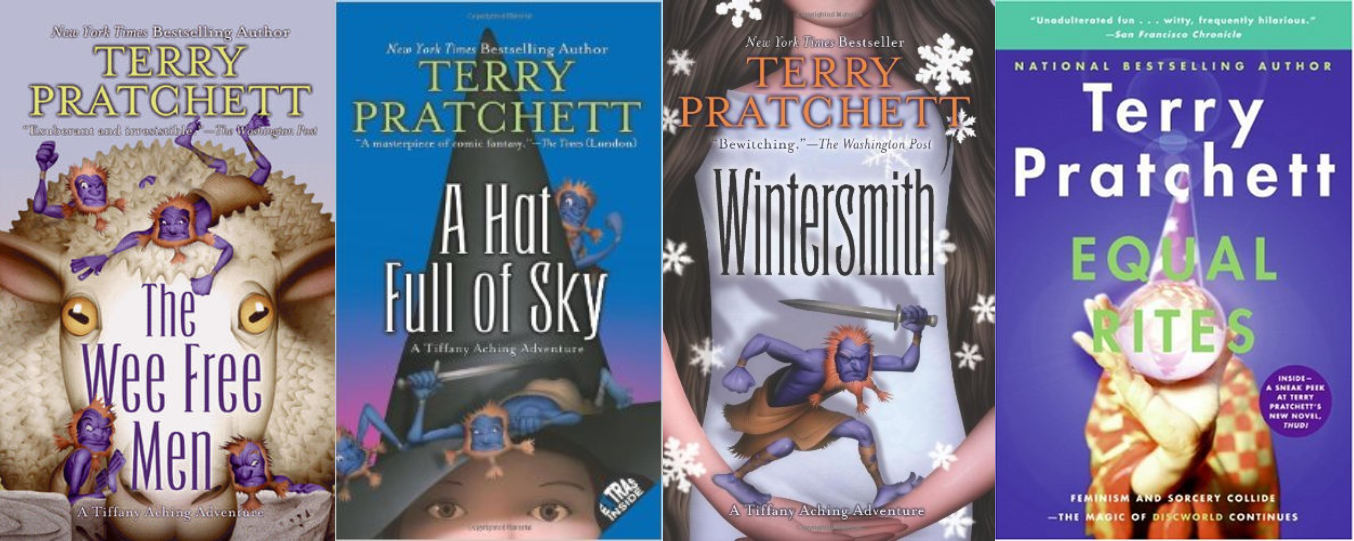
I started with the Tiffany Aching books: The Wee Free Men, A Hat Full of Sky, and Wintersmith.  There’s one more, I Shall Wear Midnight, but I haven’t gotten around to it yet.  And then I picked up the first of the witches books, Equal Rites.  To say I’m a fan is an understatement.

First of all, I have a thing about men who write women.  Most men do it very badly, especially in the Fantasy genre.  The women in Terry Brooks’ “Magic Kingdom” books, for example, are a very good approximations of females.  But there’s something not quite right about them, although it’s hard to put a finger on what.  The same can be said of all the women in The Lord of The Rings (although I LOVE Tolkien second to none), anyone in the Wheel of Time series, even The Princess Bride a bit.  Don’t even get me started on Piers Anthony…

Pratchett doesn’t have that problem.  His women are WOMEN, real and accurate.  They care about domesticity, even while they strain against it.  They’re each powerful characters in a matter-of-fact way.  It also doesn’t hurt that he’s wildly funny.  I wholeheartedly approve, and I’ve been disturbing Brian’s sleep because I have to keep reading them into the small hours of the night, and I can’t help laughing out loud.

So here they are in more specificity:

The Wee Free Men:  My only criticism of this book is that Tiffany seems much more mature than your average nine year old should be.  Other than that, the book is perfect.  She uses her annoying little brother as bait, and then when he’s captured, takes on fairyland with nothing but an iron frying pan and a bunch of small pictsies (the Nac Mac Feegles) who are vulgar, drunk, and hilarious.  They have awesome names like “Rob Anybody,” “Daft Wullie,” and “No’-As-Big-As-Medium-Sized-Jock-But-Bigger-than-Wee-Jock Jock.”

It’s a story full of dreams and fairy queens; and a young girl’s need to live up to the reputation of her grandmother (who was probably a witch).  Tiffany herself is so spunky and practical that she is one of the best YA heroines I’ve read.  I would 100% recommend this book in every way.

A Hat Full of Sky: Not as good as Wee Free Men, I don’t think, but still pretty great.  Tiffany’s magic attracts the attention of something called a Hiver, which wants to take over her body and live as a mean, horrible version of herself.  She’s eleven now, and living in a different city with a woman named Mrs. Level who is actually one person split into two.  It sounds strange, but somehow it works.  The coven of witches with “no leader” is great.

The Feegles are back, and funnier than ever.  It seems like they’re hilarity is more for show than for actual plot furthering, but I do have to say that the dialogue while they’re all glommed together in a suit of clothes so they can pretend they’re a full sized man is just golden.  Especially everyone’s complaint about being the knees.  It’s sort of nice to see Rob Anybody coming into his own as a leader, too.

Full of much worthy stuff, and well worth the read, but not as tight as the other Pratchett novels I’ve read.

Wintersmith:  This was another of my favorites.  Tiffany is thirteen now, and studying with a Miss Treason, who is utterly delightful (if the adjective “delightful” can be applied to someone deliberately trying to seem nefarious).  She’s scary, and uses magic props from a catalogue to set up a haunted house-ish place in order to gain respect from the inhabitants of her village.  She takes Tiffany to the Dark Morris dance one night, and Tiffany gets swept up in it; dancing with Winter even though she isn’t supposed to.  The Wintersmith falls in love, and starts doing all sorts of embarrassing things like making snowflakes and icebergs in Tiffany’s image.

The Feegles are back in all their glory, along with an inexplicable sentient cheese.  The cornucopia is also pretty amazing, dumping hundreds of thousands of things you definitely don’t want into the house.  My favorite thing in the whole novel is all the “waily, waily” from the Feegles when Tiffany starts performing The Pursin’ o’ the Lips, and The Tappin’ o’ the Feets.

The end also feels inevitable and perfect.  I’d say it fully earned the awards it won.

Equal Rites: A hilarious comedy of errors, of sorts, where a wizard gets word that there will be an Eighth Son of an Eighth Son born in a small town and passes his staff on, but the Son is actually a Daughter instead.  She’s sort of forced to become a wizard.  The staff is temperamental, and  Granny Weatherwax is such a great character.  I got gleeful when she starts to make a bit of a romance of things with the head wizard.

Eskarina, or Esk, (the Daughter) is a stubborn girl.  She ends up entering the wizard academy as a servant, but still manages to learn a lot and ultimately saves the day.  Pratchett has such a way with character that you can forgive him a bit of density in his magical theory, even when she and the main wizard character come up with things that are utterly incomprehensible.  Did I mention that the librarian is an orangutan?

10/10 would read again.   And incidentally, if you’re looking for a well written essay by Pratchett on gender in fantasy, there’s a great one here: http://ansible.uk/misc/tpspeech.html

Categories: Book Review | Tags: , , , , , , , , | Leave a comment

Comfort Books

IMG_20140608_083438

I was perusing some Reading Rainbow interviews with authors the other day (and by “authors” I mean “Neil Gaiman,” but I can’t let the internet know how out of hand the stalking has become.  Shhh, don’t tell).  They were talking in the interview about Comfort Books.  I had never heard of comfort books, but the second they mentioned them I knew exactly what they meant.  Those of us who are crazy voracious readers DO have books that we turn to when things are stressful, and we just need a little escape.

It’s so hard to tell people what your favorite book is.  As a reader, I seek for the life-changers; the books that tell me something about myself and my world that I didn’t know before.  I find enough of them that it’s worth it to slog through the things that aren’t as good.  And there is a definite place for things that are merely enjoyable with no Message (see Beach Smut for more info).  I could list off so many books that I found life-changing for you right now.  It’s impossible to pick a favorite, because a lot of them are mood-dependent.  Picking a favorite book is like picking a favorite child. You like them for different reasons, maybe, but better or worse?  No.

But a Comfort Book?  I can tell you my few comfort books right away.  They’re books where I love the world so much that I just want to be in that one instead of my own for a while.  They’re not always the life-changers, either.  It’s a different thing.  So in that spirit, I thought I would discuss mine.  They’ve changed quite a bit over the years, mostly because I can’t read some of the old ones anymore. I’ve read them so much I can recite passages by memory.  Things stop playing in your head like a movie when you can recite them along with the text.  So here are the books I turn to for comfort these days:

  • Howl’s Moving Castle, House of Many Ways, The Lives of Christopher Chant, Charmed Life, or Enchanted Glass by Diana Wynne Jones:  All feature great, zany people in worlds where you can mostly order things to be how you want with magic (although it usually doesn’t turn out how you think it will).  Laundry multiplies, stolen items call out who owns them, you can open the door on the city and then turn the handle and end up in a field of flowers, and the troll in the garden keeps outgrowing his clothes.
  • Austenland or Midnight in Austenland by Shannon Hale:  Austen’s great landscapes take a turn for the silly in both of these, where the line between fantasy and reality is really hard to see.  There are yummy, melt-worthy men.  But the books also contain some profound truths.  Like when Charlotte realizes that she was about to let a man kill her because she didn’t want to hurt his feelings.
  • The Blue Castle by L. M. Montgomery:  I love Valancy’s stodgy relatives so much.  And it gets even funnier when she gets the letter telling her she’s dying, because she doesn’t care at all about shocking them anymore.  There’s Roaring Able, the debauched and usually drunk carpenter, and Barney Snaith in his backwoods island home that is full of cats and firelight, and Uncle Benjamin’s horrible puns.
  • Emily Climbs by L.M. Montgomery: Emily is such a great girl, and the exploits she finds herself in are so funny.  You have to love the aunts at New Moon, and how mean Aunt Ruth is, and Ilse’s terrible behavior.  Add all of that to a realistic picture of life as a young writer, and you get something that’s just so lovely.
  • Little Town on the Prairie or These Happy Golden Years by Laura Ingalls Wilder: All the girls are old enough that they’re real people and their adventures are more interesting (to me, anyway).  It’s easy to imagine what it would be like to live in DeSmet, and it’s nice to have a coming of age story where everyone in the family still basically likes each other.  Plus, how can you not be head over heels for Almonzo?  You can’t.
  • Lake Wobegon, 1956 by Garrison Keillor: A charming, if sometimes crass, book about a boy’s experience in a small town in high school.  He terrorizes his sister, is secretly in love with his cousin Kate, is too dweeby to hang out with the local bad boys (who have a band), writes stories about dogs who can talk, and deals with Dad’s neuroticism.  It’s all funny.  Especially the baseball stuff.  And you have to love Kate too.  So much.

I have a feeling that Rainbow Rowell’s Attachments and Fangirl are going to be added to that list, although it’s really too early to tell.  Also, I never realized how many of them there were until now.  Yikes.  I don’t know what that all says about the inside of my head and what spaces I like to inhabit, but there it is.  Someone do some psychoanalysis. Quick.

Categories: Book Review, Comfort Books, Diana Wynne Jones, Garrison Keilor, L.M. Montgomery, Laura Ingalls Wilder, Shannon Hale | Tags: | Leave a comment

Book Review: The Art of Asking

theartofasking_image

I just finished The Art of Asking.  I don’t even know what to say about it, because it filled me up full of feelings both good and sad.  It felt like a story I was intimately familiar with, and yet something wholly new.  It left me with so many images from my own marriage, my own struggle toward legitimacy as a writer, and my own hang-ups about asking.   It has left me feeling confessional.

I joined the AFP fandom right about when she found out that Anthony had cancer and cancelled her tour.  I remember being worried for them.  I was jealous of all the house parties.  I’m a lurker, though.  I have never tweeted her, never tried to attend a show, never attempted to find Neil at a signing.  I made a highly-inappropriate-for-work playlist of her songs and played them in my lonely office in the basement of Chapman University.  I thought about buying tickets to the book tour in Los Angeles, but I didn’t.  I am an introverted, fuddy-duddy house maker. I will go one of these days, though.  I will.

Amanda and I are fundamentally different people, but so many of those life changing moments she writes about are moments I have had myself.  Like the tear-jerking relief of being told to keep going.

Oddly, it is Neil who gave me the first words of encouragement that weren’t from people who love me (and have to be complimentary).  I spent a year and a half researching a 45 page thesis on Deaf identity and film.  My advisor loved it and suggested we try and joint publish it.  He staked his PhD on me.  And then it was rejected in a mean, mean way.  I was told it was unscholarly and offensive.  I spent the night sobbing and reading Neil’s “Make Good Art” on the couch while Brian slept in the next room.  In a fit of despair, I decided that I would write Neil and thank him for Make Good Art, because at least I had a place to proceed from.  He wrote me back.  “Good luck! And keep going…” he said.  I would have kept going anyway.  But to be told I was legitimately allowed to? By a professional? A cool wave of gratitude washed over me and something in my heart released.  I wanted to cry again, this time from relief. It was a flood.

Perhaps this is why the book feels so familiar.  I have never been a statue on the streets of Boston.  I could never live at a place like the Cloud Club.  I would never shave my eyebrows and draw them artfully back on again.  Nor would I be comfortable on a stage even partially naked.  But there is so much love in this story, and the experience of needing, wanting, and being afraid of what people will say if you ask (or take) is universal.

My father was a great help to me in relationships.  Among many other things, he taught me that I could never be angry with someone for not providing me with something I haven’t asked for.  That is how I’ve lived my life.  It’s okay not to ask, but I have to assume that if I don’t ask I’m not getting it.  This is why it took me five years to see Garrison Keillor at the Hollywood Bowl (I told you I’m a fuddy-duddy).  It’s why I sometimes don’t feel like I’m getting enough attention from Brian (ask him to get off Facebook, or decline a night of Netflix? No).  It’s also why I had an amazing and awesome graduation party.  That one was important enough.  That one I told him I wanted.

I am slowly learning to ask; to hit myself over the head with my own “legit” wand as a writer.  The Art of Asking is a chronicle of Amanda’s journey toward the same and it is extraordinary.  It has exposed me to the wonderfulness of  a life I never would have led.  Although places, dates, and names are unique the inside struggle is something we all share.

I heartily, 100% recommend the book with all my heart.  I simultaneously want to loan it to everyone I’ve ever met (especially my artist friends) and can’t bear to part with my copy.

You should definitely go read it now.  I promise, you will walk away with something new and invaluable to think about.

Amazon Affiliate link here: The Art of Asking: How I Learned to Stop Worrying and Let People Help

Categories: Book Review | Tags: , , , , | Leave a comment

Mockingbird

IMG_20150103_075414

Harper Lee is coming out with a new novel. I was VERY excited about it, but now I’m a bit worried… according to reports, Harper Lee isn’t all there and will almost sign anything that’s put in front of her. Her sister, who had it very together and took care of all Lee’s business, died last year. I hope it’s all fine, and I do trust that Harper Collins is a company who won’t outright screw her over. I just hope that the other people looking after Lee are trustworthy too. They’ve proven otherwise in the past.  If you’re interested; http://the-toast.net/2015/02/04/questions-harper-lee-editor-interview/ is a pretty great article explaining all the ins and outs of the crazy.

I was excited in large part because To Kill a Mockingbird was a huge part of my formative Junior High years. Back then, the teacher would give us a book, and then we would read it (sometimes during silent reading time in class), and then we would do a bunch of projects on it. I read so much faster than my classmates that I had usually been through the thing 4 times – at least – before we switched to the next book.

To Kill a Mockingbird was different. They messed up my schedule royally due to a new computer system and I was placed in a different class, with a different teacher, who were on a different reading schedule than my own class. The book they were reading? Yup. Scout, Atticus, Boo, and Jem followed me from place to place that year. They eventually put me back into my old class where my quick reading habits got me caught up quickly on whatever we read next – I don’t remember the book. But I definitely remember Atticus’ embarrassing talent with the mouth harp, and how he had to shoot the rabid dog that summer day, having to look up what a chifferobe was (it’s a wardrobe with drawers), and how the town drunk didn’t have alcohol in his brown paper-wrapped bottle.

I hope it’s all on the up-and-up with Harper Lee. I would really hate to not read this book.

Categories: Book Review | Tags: , , , , , , , , , | Leave a comment

Book Reviews: 3 by Rainbow Rowell

Rainbow Rowell is my new obsession.  Her books are filled with flawed characters who live in the world I do and want the things I want.  Her plots may be slightly unlikely, but they err on the “OMG I wish that happened to me,” side.  Oddly enough, they make me long for that time when I was 20 and uncertain of everything except how much I loved Brian.  And how easy it was to love him in detail back then without the cares of the world to intercede.  I don’t get nostalgic for my 20s often, so the fact that Rowell can do that is a form of magic.  At this point, I’ll be reading everything she’s ever written.  The only one I haven’t dived into so far is Eleanor and Park.

My conclusion in a nutshell: READ THEM!  READ THEM ALL!  NOW!

Rainbow Rowell

Attachments: A Novel

I picked up this book because the premise sounded fun.  Man hired to read and screen company e-mails gets sucked in by the quippy correspondence between two girls in the office and falls in love with one.  I mean, it was written by a woman named Rainbow.  It had to be fun, right?  I expected a cute, light read.  What I didn’t expect was the depth of character.

Lincoln (the e-mail reader) is this sad guy deeply in need of, well, something.  He lives with his mother and pines for the high school girlfriend who cheated on him once they got to college.  He’s pathetic, but there’s something so attractive about him just the same.  You feel sorry for him, but at the same time you can see how a girl would fall head over heels for him.  I don’t know how Rowell does that, but it’s brilliant.  One of the many reasons to love her.

There is depth in the story of the two girls, also.  One pregnant with a baby she isn’t sure she wants even though she’s happily married.  And another who is trapped in a relationship with a man who has been very clear that he will never marry her, despite her desire to get married.  They go beyond being funny (which they are – hilarious), and become genuine people.

I won’t say too much, but the ending is way more satisfying than I ever thought it could be.  A+

Landline: A Novel

This book is strange, from the standpoint that everything else in Georgie’s life is totally normal, except that she finds a telephone in her bedroom that calls the past.  When she has to stay at home over the holidays to work on a script, her husband takes the kids to his mom’s house without her.  And then is strangely unreachable.  Also enter complicated relationship with male best friend.  So she calls on the telephone and talks to her husband Neal just before he proposed to her, in another time and place 20 years earlier when they were also on the rocks.

This book felt really familiar, in that I think all people who are married build up baggage and decide that the other person is  judging them for things when they might not be.  And that there is a past that was blissful without responsibility involved.  This is the book that made me really nostalgic for those college days when I used to drop by Brian’s house between classes, when he took me out for hot fudge sundaes after work at 2 am.

If this book has any flaws, it is the unlikeliness of that phone existing, and the fact that there doesn’t seem to be an unsolvable problem between Georgie and Neal.  It’s all in her head.  But the flaws might be all in my head.  It was a pretty great read.

Fangirl: A Novel

Just as I’m about to say that this one is my favorite of the three, I remember how great the other two were.  But seriously, this one is SO GREAT.  Cath and Wren (twins) go off to college, and socially challenged Cath is dismayed to find out that her sister doesn’t want to hang out once there.  Cath much prefers the online community she’s built as a fan fiction writing mogul to meeting any new people at all.

But it’s about living with social anxiety, living with a mentally-ill father, dealing with the tragedies in your past, learning to write, and letting yourself fall in love.  Cath’s roommate, Regan, is so negative that she’s hilarious.  Levi’s aerie in the house he lives in is my favorite thing ever.  I would never leave.  And there are super-hot, reading aloud to each other leads to heavy petting, scenes.  Basically every fantasy I’ve ever had.  Another amazing read.

I hear there’s going to be an actual Simon Snow novel next.  I’m a little thrilled about that.

All links are Amazon Affiliate links. Happy reading!

Categories: Book Review | Tags: , , , , , | 1 Comment

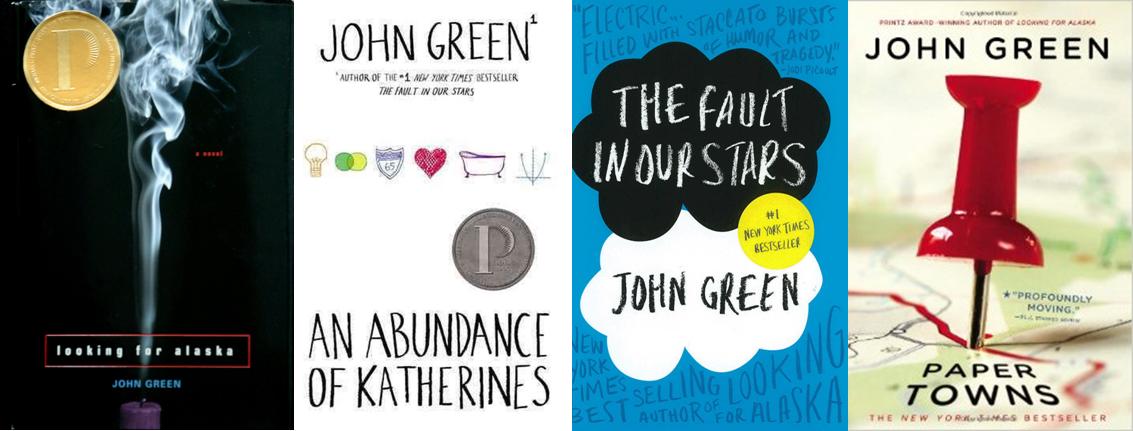
Book Reviews: 4 by John Green

John Green

Looking for Alaska:

I picked this one up because I felt I had to jump on the John Green, The Fault In Our Stars bandwagon. The movie was coming out, and his work was EVERYWHERE. Even if I didn’t like his stuff, it was enough of a cultural phenomenon that I had to have an opinion. I knew I couldn’t handle a kids with cancer, dying sort of novel so I looked at what else he had written. Looking for Alaska was a NY Times Best Seller.

I really loved the way he organized this novel. Most of his books are the linear chapter 1, 2, 3… you expect but this one isn’t. This one is broken up into “before” and “after,” but you have no idea what the event in the middle is until it happens. I had a growing realization of the doom of it as I read the novel and I hoped I was wrong. I wasn’t.

Pudge and the Colonel are hilarious with their dilapidated couch, and their milk & vodka antics. Alaska is a spitfire of a girl who feels so real that she’s easy to fall in love with despite the crazy that’s lurking inside. Pudge has his last words and his Great Perhaps. She has her Labyrinth. The pranks they pull are genius. Especially the last one, the one Alaska masterminded. The novel walks this line between tragedy and comedy, with plenty of embarrassment thrown in. It feels like a cooler, more expansive version of my own high school life. My only criticism is that Green uses the high school, class-mimics-life trope that is so overused in high school stories. But if it has to be used, this is the way to do it.

I read a lot, and what I am reading for is to find those novels that take up head space and linger. They are rare. If I don’t find it in 80% of the books I read, I am at least guaranteed some entertainment along the way. Looking for Alaska is one of the lingering kind. I read it on kindle, but I purchased the nice hard back. It’s a keeper.

 An Abundance of Katherines:

This novel wounded me, and I’m not really sure why. It’s lighthearted. It features the Archduke Franz Ferdinand, a pig hunt, a grand theorem of dumping, a cave lair, and plenty of other silliness. I don’t know how John Greene gets women so right, but his girls are all some of the few women written by men who feel real. Lindsay Lee Wells is the sort of girl I wish I was: bold with no nonsense and sweet all at the same time. Colin’s assertion that his prodigy status doesn’t automatically make him a genius (or even successful) felt so true. Hassan’s Arabic insults make me smile.

I was wounded, I think, because the novel is about the things we give up because our families have expectations of us. It seems easier to not do, or conform, than to decide and leave. It’s about the burdens of a good upbringing amongst a supportive family and how that can shape someone, too. Lindsay Lee Wells’ life is not like my life, but I recognized her problems as old frenemies.   It’s about other things too, of course, and some are probably more evident to others than my own take away. Like the quest of us all to be original and the ways history changes through the generations. But that was the one that stuck in my heart and kept me pondering.

This was another book that was a thinker. I’m a convert to the John Greene church of nerdfighting (or whatever). I bought this one twice, too.

The Fault in Our Stars:

Perhaps, you think, I should have seen it coming? I did not. I thought, ‘John Greene, amazing writer, in a lauded book I’ve seen on the internet everywhere. I never cry at books. After the other two, I think I’m ready.” I also made the mistake of reading it on my lunch hour. I have not cried over a book since I was 12 and John Brooke died in Little Men. I ugly cried on my lunch hour over TFIOS. I’m 32. It didn’t help that tall, quippy, Augustus Waters reminded me a little of Brian.

Maybe I wouldn’t like to be Hazel Grace with pips in her lungs and an oxygen tank, but I would like to have that smart brain of hers. She is another force of nature like the rest of John Green’s girls. Her parents are great people. Augustus’s search to make a mark on the world that was permanent is something everyone I know has experienced. Isaac’s blindness is sad. All of their stories are sad, but they are so smart and so funny in the midst of all this tragedy. It is gallows humor, but it is the funniest gallows humor I have ever read.

I could say things about Amsterdam. Or about universes needing observation, tasting the stars, video games and inspirational needlepoint, or the literal heart of God. But I realize that I can’t even put this book into words. It’s something that must be experienced. It defies summary.

This one wasn’t a thinker. It was a life changer. Those are the rarest kind of books of all.

Paper Towns:

When I originally read Paper Towns, I felt like it was the worst of all John Green’s books (That sounds more terrible than I mean it to sound. It’s still far, FAR superior to most things I come across. ‘Worst’ is in relation to the rest of John Green, not to the rest of literature). I will still assert that Looking for Alaska was a better finding someone novel and An Abundance of Katherines was a better road trip novel. I did like his thesis that some people are windows and some people are mirrors, and you never know if you’re looking in a mirror or a window when you see someone. I feel more mirror than window most days.

The book is beautiful, too; all these abandoned settlements, tract houses, and malls. Visiting them was fun. Learning about paper towns was so interesting. There is a dog named Myrna Mountweasel. I realized after a few days that I do find myself thinking about this one. After I had written it off as not his best, I found myself pondering the abandoned mall, and the place they find Margot, among other things. I’m sure if I had read this one first it would have been another favorite. I still recommend it, but after TFIOS it was anti-climactic. Perhaps that is the real reason I didn’t fall head over heels with it.

Categories: Book Review | Tags: , , , , , , | 2 Comments

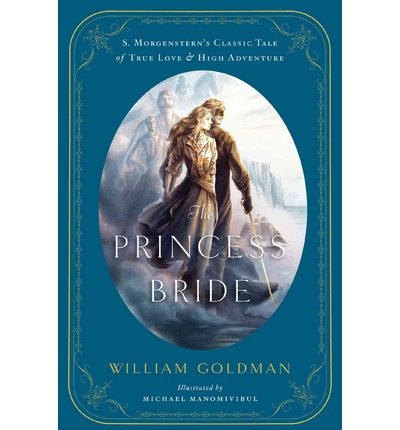
Book Review: The Princess Bride

9780544173767

I hate to admit it, but I had never read The Princess Bride. I am a terrible nerd, and should be forced to hand over my membership card. No one who GMs Savage Worlds games should admit to such an atrocity, I’m sure. I have seen the movie. Many times. And I can quote large swaths of it. Isn’t that enough?

Yeah, don’t worry, I know it’s not.

I had several friends in middle school that loved the novel and thought Florin was an actual place. They would argue with me, and claim that they couldn’t wait to get their hands on the unabridged version if they could ever find one. That is the joke, though. There is no unabridged version, and there is no Florin, no Guilder. S. Morgenstern is a made up fellow, much like Daniel Handler is Lemony Snicket. I don’t wonder that our pre-teen selves were bamboozled. Especially in a time before internet was prolific. When things got heated, when they insisted that there were swathes on culture that had been taken out of the book and that obviously made those countries legit, I would stop arguing and start nodding and smiling. Whatever you want, friends, as long as I don’t have to believe it too.

I don’t know why I never picked up the book myself in those years. Maybe it was because I was too obsessed with Tolkien. His fantasies felt like histories. I dove into Middle Earth and didn’t emerge for years.

But I picked it up a few weeks ago, and this is how:

I have been trying to get myself to write more consistently. As part of that, for every 30 days I write (not necessarily in a row), I buy myself a present of a fancy book or two. I have been letting John Greene traumatize me for the past month, and enjoying every minute of it. So I thought I was going into the bookstore for hard back copies of The Fault In Our Stars, Looking For Alaska, An Abundance of Katherines, or maybe even Paper Towns (which I haven’t read yet). They were there on the shelf, and they were so pretty. But there were too many of them. I couldn’t have all four, and how would I ever decide?

The Fantasy section is right behind the Young Adult section in my bookstore. I turned, and there it was in all its blue-bound glory tucked among the Tolkien books and the George RR Martin books. The illustrated Princess Bride, hard covered, beautiful, abridged. The pages are glossy, the illustrations are gorgeous. I had never read the book, but I knew I would like it. And that my husband would like it. And that it would be something to treasure for a long time, because they don’t make editions this pretty every day. It came home with me.

It reads like the movie, only much better. The snarky comments of Goldman, the abridger, are hilarious (he’s never read the novel – he’s only had it read to him. He cut out the parts his father used to skip). The story is broader and more real than the movie, which feels like a silly but intelligent fable. The characters are real and flawed, but worth loving and the back story Goldman has sketched out for them makes them all the more lovable: Buttercup’s love of dirt and slight stupidity; Inigo Montoya’s swordsmith friend; the Zoo of Death. The jokes are just as good as the movie, too.

I can’t say I’m sorry I read the book as an adult and not as a teen. I don’t think I would have understood the footnotes, the jokes about Goldman’s inability to publish Buttercup’s Baby due to estate problems with Morgenstern, or the way he talks about the country of Florin. It would have all gone over my head. What I would have been left with is the sweet, impossible fairy tale that appears in the movie. But I would have missed the sense that I was in on this gigantic inside joke. I am glad I bought it, glad I read it, and I think everyone else should too. No, really. Everyone. Especially if you are an adult and like fantasy novels.

Categories: Book Review | Tags: , , , , , , | Leave a comment

Of Pilgrims, Fear Brewster, and Origins

IMG_20140426_203926

One of the many amazing things about my current place of employment is their commitment to diversity. I attended a Trans/Ally workshop two weeks ago that was a series of several the college put on for all of us to attend over the summer break. During one of the many activities, the class out a (confidential) form that asked how we identified culturally. I didn’t know what to put. I know that our origin stories are important, but I have often felt that I don’t have a culture. I’m a white American, which means default, which means nothing. How should I fill out that box? And then I had a slow realization about my cultural identity.

I was eight years old when I decided I wanted to be a pilgrim when I grew up. And I don’t mean an adventurer who immigrates via plane or ship for a new life. I mean the people who traveled the intrepid sea, late from too many leakage problems, persecuted for their religious beliefs in England, who settled Cape Cod in the 1620s.

Plimoth Plantation, the first living history museum, is magical. It sits on a hill; the gray houses dug into the earth, surrounded by a tree trunk palisade that is surrounded by waving fields of corn. The main road slopes downward from a fort on the tip of the hill, and at the bottom is a view of blue ocean that seems to stretch forever. Here, you can leave your car in the parking lot and go listen to Miles Standish complain about how boring he finds church or ask him for a lesson on how to load a musket. You can watch Susannah White hold onto her straying toddler by the straps sewn onto the shoulders of the child’s clothes. Edward Winslow will let you tie knots for the fishing net he’s making from a ball of strong twine.

Growing up, I visited them in Massachusetts on the blue and gray shore for as long as I can remember. Maybe not exactly every summer, but near enough. My Aunt Sue used to get the pass from the local library when we were coming to town. She knew how I felt about the place.

When I asked the man in the green tabbed vest if they had any kids on board the Mayflower, he told me that they had plenty of sheep and a couple of cows, but he didn’t recon there were any goats on board. In the village, a woman told me that her pregnant neighbor was obviously having a boy, because she always stepped out of the house with her left foot. Another said that women usually wore six to eight skirts. When I went home I pulled the four my mother had packed for me out of my suitcase and put them on to see what it would feel like. It was heavy around my waist, and I had trouble getting the fourth skirt to zip.

I was thirteen when the woman behind the counter told me to hang on a second. She would get me a teacher’s packet from the back, because the more I knew about the pilgrims the more likely they were to let me work there someday. I studied the folded pieces of paper, tucked into a number ten envelope, and learned about baby Oceanus who was born on the Mayflower mid-trip.   I learned that they had come from Scrooby, England, by way of Holland where they had worked in the cloth factories. I learned that they called themselves Saints, and that in the first winter more than half the Saints died from a wasting sickness in the ice and snow.

I was eighteen when I decided it was time to apply for a job. It would be an adventure, to live out a fantasy and play pilgrim on that historic shore. My aunt and uncle were nearby if I got into any real trouble. But were there women I could portray? There were stories of children, and stories of adult women, but I had never heard stories about teens. I turned to the computer. It was my first foray into historic archives and I fell in love, with the hand-drawn maps of lot divisions and the signatures on the Mayflower Compact, and with a nineteen year old girl named Fear Brewster.

It was the name that struck me. In a time when Oceanus and Remember Patience were popular and valid, perhaps Fear is not so out of place. But a woman named Fear? Was she born in fear, was she a girl who was afraid, did the name make her fearless? She was a Brewster, one of the few Mayflower families that people who aren’t career historians remember. She married Isaac Allerton, a man more than twenty years her senior, who was embezzling goods that were supposed to pay the colony’s huge English debts. She died before the age of thirty of a wasting fever. She had a son. That is all that is known about this woman with the fascinating name. That is all history has left us.

 And so I am left to speculate about the things she thought of a journey to a bleak shore where nothing waited but starvation and wattle and daub hovels. Or what she thought of her husband. Of how she played blind to his thefts because it was unthinkable to confront. Of how young she was and how little she could say to a husband who was not only a Man, but an Adult in a time when women were flighty, sinful and childish; regardless of age.

I will never be a pilgrim. That much is certain now. I met my husband that summer and left the completed application folded in a drawer in my bedroom. I have never marched down the dirt path, a cloud of dust at my feet, carrying a basket and wearing six skirts in the humid Massachusetts summer. I have never sat and sewn under a tree while trading riddles with the other women in the circle. I have never been Fear Brewster.  

And here is the thing: I don’t even have pilgrim ancestry to claim, only the militant and unimaginative puritans who came after them decades later. Maybe. On my mother’s side. On my father’s side, the John Elderkin who came over before the pilgrims was probably one of those deadbeat Jamestown fellows, or worse. Why I have claimed the pilgrims as my ancestry, I cannot fathom. They don’t belong to me and I know that. But in the same breath that I deny their link, I also feel it.

Sometimes when it is raining outside, I sit by the window and ponder how frightening it must have been when the central beam cracked during a storm on the Mayflower. Some nights when I am lying awake next to my sleeping husband, I wonder if Fear ever looked over at Isaac, at his buttoned up eyes and the stubble on his chin, and thought about how handsome he was.

In the age of social media, I follow Plimoth Plantation everywhere they have accounts. It is beautiful and heartbreaking to see those photos of the past come to life in a little town just south of Boston; heartbreaking because it has been more than ten years since I walked those streets and I always want. But sometimes the things we dream about don’t come true. I know that Fear and I have that in common, too. In my case, I think giving up that dream was worth the reality I was granted instead. I hope that Fear felt the same.

Categories: Early America, Life | Tags: , , , , , , , , | 1 Comment

Oh, Amazon…

IMG_20140805_130642

So it turns out that not only is Amazon blocking Hachette (http://online.wsj.com/articles/amazon-hachette-e-book-pricing-battle-continues-1407708761), but they’re trying the same shit with Warner Brothers (http://mashable.com/2014/06/10/hachette-warner-bros-amazon-lego/) and Disney (http://bits.blogs.nytimes.com/2014/08/09/amazon-takes-the-muppets-off-the-shelf/?_php=true&_type=blogs&_php=true&_type=blogs&smid=tw-nytimesbits&_r=2&). Umm, I don’t know how you expect this to end guys, but I predict that it won’t go well. In addition, Amazon has sent out a letter to all their self-published KDP writers asking them to write to the CEO of Hachette and complain (http://bits.blogs.nytimes.com/2014/08/09/orwell-is-amazons-latest-target-in-battle-against-hachette/). Another really bad idea, I would imagine; even if they had gotten their literary references correct. Amazon is now putting people like me (who just want to read a damn book, or sell a damn book) in the middle of this thing. It’s like running to mommy when the big kid tries to take your lunch money, except that Amazon is supposed to be the mommy in this situation. 

I am shaking my head over here. Also, I’m angry.

Frankly, I don’t care how I get my stuff as long as I get it. I liked the fact that Amazon is easy to use and all in one place; I can click a single button and the thing I’ve ordered arrives. However, all my stuff is no longer in the same place or will arrive reliably. Shannon Hale is with Hachette. Amanda Palmer is with Hachette. JK Rowling and Stephen Colbert are with Hachette. I LOVE the Muppets.  I really don’t like getting dicked around because two giant corporations can’t get it together and make an agreement. I don’t think that Hachette is blameless, but I do think they’ve played the PR game better. And really, for me, the whole thing is about access. I don’t care how Amazon and Hachette resolve this thing, I just want to be able to read what I want to read. I also don’t mind paying a little more for that privilege.

So basically, this post is to say that I’m done. Amazon obviously can’t give me the customer experience I need. I love that Kindle app on my phone, but did you know that Kobo also has a reading app? I downloaded it last night and I already love it. Their prices are not that different from Amazon, and I was able to preorder both Shannon Hale’s “A Wonderlandiful World” and Amanda Palmer’s “The Art of Asking” with the click of a single button. It loads faster than the Kindle app, too, and they give me fancy badges for reading stuff! There is also a little green bookmark that goes into your page when you sign out. Next, I’m going to try Powell’s (http://www.powells.com/) or Vroman’s (http://www.vromansbookstore.com/) for all my physical book ordering needs. There is also the fabulous Barnes and Noble, for the large and established factor.  I’m not going without stuff to prove a point I don’t care about, Amazon.  Maybe if you had gotten that George Orwell quote right… (Okay, not even then).

In the mean time, I wish both Amazon and Hachette luck in figuring this whole thing out. Now excuse me while I go enrich Wil Wheaton’s stock in popcorn by buying a huge bowl for myself. I’ve figured out a way to get my books like I want them and I no longer have a stake in the game. Now the travesty can unfold for my amusement.

Categories: Book Review, Life, Writing | Tags: , , , , , , , , , , | Leave a comment

Book Review: 2 Lyra Novels, The Raven Ring and Shadow Magic

514YglUUiGL._SY344_BO1,204,203,200_51ydfPXOc8L._SY344_BO1,204,203,200_

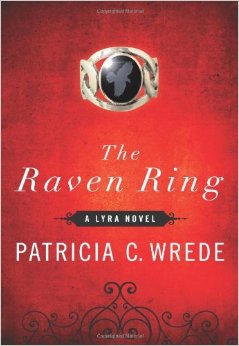
Patricia C. Wrede, The Raven Ring:

Remember how I said I didn’t really like reading D&D campaigns? Evidently this book doesn’t apply. It’s full of tropes that usually infuriate me into a book throwing rage, and yet I enjoyed this. I can’t put my finger on why. The story line was one of the usual things in D&D campaigns. Mom dies, so scrappy daughter goes to collect Mom’s things only to find out that Mom was murdered and people are after her things. Chaos and kick-assedness ensue. For extra good measure, there’s an aristocratic, handsome (and full of himself) swordsman. He’s good at the fighting stuff, but not as good as the heroine. There’s also a cocky and friendly thief who belongs to a mafia-like family. There is wizard wisdom and magic galore. Everyone makes a pass at the main character. (sigh…)

But it was fun and light, with just enough surprises to keep the standard adventure plot feeling comfortable and not stifling. It did have a few flaws. The resolution felt like it blindsided me, it happened so soon and with so little warning. I thought it was another complication until I realized that the book was over. It was well chosen, though, and ultimately satisfying. I also can’t help but wish that the main character didn’t end up with any of the boys and just left for home without a fellow in tow.

Seriously, though, for as cavalier as I’m treating this review I did stay up all night to finish the book. That’s not something I do often these days. I also downloaded another Lyra novel ASAP and devoured that one in the space of about six hours as well. That book was:

 ***

Patricia C. Wrede, Shadow Magic:

The book is again along the D&D Campaign lines, and I fell in love with it harder than I did the Raven Ring. Kayl has two children and a dead husband when the magic seekers come to town. Escaping them, she’s pulled into her old life in the house of the Silver Sisters. They want her to go back to the twisted black tower where a dark ooze ate her best friends, leaving only four of them alive to bring the story to others. She’s fifteen years older, out of shape, and out of sword practice, but she has to go and complete the mission (children, and all of the people from the old expedition in tow) and hope they don’t all die in the process. She has memory issues, too, and one of her friends looks to die from the prophetic visions the tower gave him so long ago.

I felt like some of the reasons to have the children along were contrived, but they ultimately played an important part in the resolution of the story, so I forgave Wrede for the wishy-washy excuses to have them go the whole way. Besides the constant bickering between the siblings (which I’m sure is realistic but isn’t always fun to listen to), that’s really my only beef with the book. The rest of it was excellent. The plot is less predictable, and left me guessing (and drooling, and wondering) to the end. Pacing was perfect.

 ***

Some thoughts about both: Perhaps what I am fascinated by most in these books is the world of Lyra. It feels real, and I’m forever learning about secret societies, different races, and different customs that fascinate me. Her characters are so well developed that it doesn’t really matter if the campaigns are standard roleplay fare, because they trump cliché with humanness. With many bonus points for books about kick-ass mothers.

At a highbrow party I would be much more likely to recommend The Enchanted Chocolate Pot by Patricia C. Wrede and Caroline Stevenmore, or Wrede’s Frontier Magic series to strangers, but there’s just something about both of these that makes them impossible to put down. Excuse me while I go download the next.              

Categories: Book Review | Tags: , , , , , | Leave a comment

Create a free website or blog at WordPress.com.