Fiction

Fairy Tale

This story is on my Clarion website, (go to http://clarionwriteathon.org/members/profile.php, and click “Show/Hide excerpts at the bottom) but I liked it so much that I had to share here as well. It’s a fairy tale from Kwedregiol, the place where my first novel happens.

IMG_20140719_083707

Once there was, and once there wasn’t. In the long-distant days of yore, when haystacks winnowed sieves, when pixies played stickball on the cliffs of the Elums, and when I softly rocked my baby grandmother to sleep in her creaking cradle, a man walked the earth. He was a tall man, sleek and muscular, his frame rose bigger than a market stall and glistened golden like a bonfire. The people of the mountains called him Michegua, for he had no name of his own.

Michegua was a wise man. Michegua was a forgiving man. Michegua was a generous man. He gave the people of the mountains many things. First, he gave them the rising sun so their crops would grow hearty and hale. Next, he gave them fire to cook their meat and to give them safety from animals in the darkness. Third, he gave them laws.

Can you recite them with me? The five laws of Michegua? They bind us all, and so we must know them. Here, begin: Do not kill for aught but sustenance. Do not lie and do not steal. Rest one day, of the week to reflect on your blessings. Honor your betters. Strive in all ways to treat others as you would be treated.

Because of the great gifts of Michegua, the people came away from the mountains. They settled in green valleys beneath blue skies. They tilled the fields until the earth turned golden, tassels of corn waving in the wind. They settled by the sea and let the ocean breezes whip their skin into ruddy health. They became the people of the earth.

Only a few of the people stayed in the craggy, gray mountains, because they revered the place where Michegua had come first. For them, Michegua gave a trail of bright blue gentians. The little flowers dappled the mountain sides. This was so the people of the mountains did not miss the sea, for they had deepest blue growing on the hills. This was so the people of the mountains did not miss the waving corn, for the blossoms would wave in the wind. This was so the people of the mountains would always remember that they were the faithful who loved Michegua and the old ways the most.

Michegua stayed among the people for many years, but it came to pass that he had to leave them. In this time when fleas were barbers, and mountain goats were town criers, the people had a custom. They would give a gift to each stranger who came among them. Michegua was not a stranger anymore, but he was also not the same as the people of the earth. He was too tall and too golden. What could they give this splendid man who had already given them so much?

The oldest spoke first. “We will give him our worship,” he said. “We will make a God of him, that we never forget what he has done for us, though all the ages of the world pass by and those who are here have perished.”

The council nodded, and granted that gift.

The youngest spoke next. “We will give him increase,” he said. “We will spread across this world and thrive, because we have followed his teachings well. And everywhere on earth there will be people who know his name.”

The council nodded, and granted that gift.

The wisest spoke last. “We will give him a bride,” he said. “He will choose a woman from every generation. He shall mark her, and she shall be his. This way, he will come back to us one day.”

The council nodded, and granted that gift.

When Michegua heard of these gifts he saw that they were as great as the things he had given them, and he was touched. He called all the people together, the people of the earth, the people of the sea, the people of the mountains, so he could bid them goodbye. They met at the base of the mountains, where the sea and the land and the cliffs came together as one, the place called Kwedregiol. Michegua seemed taller that day than he had been when he lived among them. His skin flickered golden like the flames in the campfire. He took a deep breath, and shining white wings unfurled from his back.

“So you shall know me,” he said, “and also know my bride, by the wings on our backs and the love in our hearts that we both feel for you. People of the earth, go forth in my name and thrive. Multiply yourselves upon this place tenfold.”

His words echoed from the cliff face, and the people watched as he beat his wings upon the air and rose into the heavens. The wind from the down stroke of his wings brushed them all like a kiss across their cheeks. That was his parting.

The people made a white city on the place called Kwedregiol, carving it out of the land and the rocks, and in it they put the woman with the mark of wings on her body. There she waited, the bride of Michegua, for him to come back some distant day.

And as his bride was waiting, three apples fell from the sky; one for our story’s heroes, one for the person who told their tale, and one for those who listened and promise to share.

Categories: Fairy Tales, Fiction | Tags: , , , , | Leave a comment

The Sea

Originally part of a collection of short stories, A Blatantly False History of the World, But Mostly America.

IMG_20140222_094637

“Make your way to the sea,” He said. “There, we can hire ships to take us back to our homelands.” He whispered it to us in the darkness, when we had stopped toiling in the streets and in the house, serving the Romans for the day. We returned to our hovels under their vast, gilded courtyards and listened to His breath in our sleep. We dreamed.  In our dreams walked the Gods of our homelands, of the green country of our birth. We listened to His words, seeping into the heart of us, and remembered.

There were houses in the north, dug into the ground for warmth during the harsh winters. Thatch stood up from the earth like tiny hills. Snow covered the ground as the seasons turned, and those living there would press together to share heat. It was companionable, looking out the door as the snow swirled, knowing that it could not take your life as long as you were with these others. We told stories there in the cold; of the magic of the moon and the restlessness of the dead.  And then the Romans came, and there were no others, but only strangers.

Not all of us listened to His voice in the darkness. Not all of us felt His words pierce our ears with longing. Some of us were snatched from our homelands so long ago that the white marble of Rome was the only place we knew. It was tempting to stay, to try for the chance to become free again, given the ultimate gift for loyalty. But that kind of freedom was at the whim of the master. The kind He was whispering to us was something we didn’t have to rely on others to provide. It was something we would gain for ourselves. And so we left with Him. At first, we were just a small band of rebels on the outskirts of the town, living in the green hills peopled with boulders. They left us alone, and like bread dough, we rose. By the time our edges seeped from the hills, we were too big and scattered for them to bother with. This is what He told us.

He told us that the sea would be our life. If we could only get to the southern shore, we could pay the Cossacks to take us to freedom. They were no friend to the Romans, and they would help us. For enough money, they would do as we asked. This is what He told us.

The hills were very green, deep and lush. Small white flowers grew in patches, even up to the heels of the boulders. We hoisted our swords and watched them shine in the sunlight, new on the horizon. It had been ages since we felt the ungiving haft of steel, cold in our palms. We walked toward the sea. We felt the blades of grass brush our toes inside our sandals, scattering dew between our toes. We felt the rough cloth blow across our shoulders as we walked across the land. The sky was vivid blue and it stretched for days and into the future.

The hills changed. They became fields of wheat as we walked, golden to the horizon. Trees broke the line of waving grass in clumps. Sometimes, a cypress pointed to the sun above us as we strode by its shedding trunk. Once, we walked by a farm house. It was abandoned in the red sunlight, but a little dog barked in the distance. Some wanted to catch the dog; to taste the savor of dripping meat. Wheat is not always the best for a marching stomach. He convinced them we didn’t have the time.

We must always press forward toward the ocean. It is salt like our tears. It is salt like the sweat we shed for the comfort of the Roman masters, or for the life of our family in another existence far away. The ocean shall be our savior, and it shall return us to those we love.

The wheat became hills again, like a song that repeats itself. The trees stayed, to shelter the boulders and the little white flowers beneath. A hawk wheeled above our heads, dark checkered wings on the blue sky, blocking the sun as it flew past. It dipped to the green grass and pulled a mouse from the earth, tail twirling as it rose to the sky.

He said we were getting close. We wondered if the hawk could see it, so much farther could it see from its height. We remembered the ocean being vast and terrible. Sometimes it was a deep, swallowing, glassy blue. It was calm and deceptive when it looked like that, biding its time and lulling its prey into a false trust. It was black when it raged, froth shuddering over the timber frame of the ship. This is how it turned, mild to murderer in a swoop of cloud, a weeping of the heavens.

We were not at the end of the song. The ground changed again, and we could hear the rushing of the sea in our dreams from where we slept. It whispered to us in the darkness a faint crash-hush. Vast beaches spread sand before us, tan and glistening in the sunlight. The ocean was aggressive only in the way it beat its fists across the shore as we beat our fists against our masters. Gulls flew above, riding the wind in clumps. The wet breeze clung to our clothes and skin, making even our hair feel sticky with salt. We licked the brine from our lips and felt the spring stirring in our bones, the great rebirth.

Three days, we camped by the ocean. Three days, the wind blew salt into our being. On the third day, a messenger came.  It was not a good omen. A rumor went around the camp. The Romans were not happy they had no one to wait at their table. We were pinned on the coast now, nowhere to escape. The army of Rome, glistening gold helmets, red manes dripping from the gold like entrails; the army of Rome was on the march. No Cossacks would come to our rescue and give us passage across the sea to our homeland. Rome had paid them not to.

He was the first to flee, our fearless leader, the one who whispered no longer. He would go back to the hillsides, to the cave we had lived in before, He said. It would just be temporary until we could try again. We scattered to the winds. But like a blown dandelion, there is a center that is not subject to the will of breath. I am that center.

There are a handful that join me; those with ballast. Sleeping by the sea made me remember many things, and this is the tale I remembered most.

It is terrible to perish at sea not because of death. Those that fall into the foamy waves do not die. The God of The Sea is too greedy for that. Whole ships are swallowed by the blackness, and they sail beneath the waves. Seafarers make weedy sails from kelp, and skim the depths for eternity. The eyes painted on the side of their ship shine like the sun in the darkness. The God of The Sea is waiting until they are enough. When he has an army, he will send them against the God of The Land, and he will be the God of Everything. Until then, they decompose in the deep.

And with that memory, fresh and clean, came another from my childhood. They had married in my mind while I worked in this land, and while I walked across it. It was of my grandmother.

She smelled of mint as she bent over me and kissed me goodnight. “I have had a premonition of you, Geric,” she told me. “It was not good. It was full of water and darkness, and you were far from home. I will tell you a story tonight and some day you will need it. You will forget this moment until you need it, but store it away for the time when winter becomes spring. It is important.”

She told me of the Sea God, and also of how the dead cannot always die. “You can turn them to your will, if you are strong enough. You can turn them to your will for a little while, and for longer if they like your cause and agree to help you.”

This was the way: I needed a bone, even from an animal, but a real bone it must be; something that was part of the living but was now stripped of muscle and sinew, of everything that made it what it was. There was a rune to carve into the shaft of the bone. It must be exact, not a twirl or hatch out of place. If the bone was perfect, and the rune was perfect, the spell could take place. Take land from where the heels of the fallen walked. Mingle it with the living saliva from your body. Say the name of the rune out loud. Shout the name to the stars, and if they bless the bone with their light they have blessed you with control. As long as you wear the bone, you will be safe. As long as you wear the bone, you can command them. They will listen for a time before the sound of eternity echoes again in their ears and they will leave you.

It would be hard to do by the sea. The men I wanted to call did not walk upon the ground, and so I could not mingle my spit with the earth. The rune was a vague memory in my mind. The smell of mint echoed through the ages. I would remember, I whispered to my grandmother in the dark. I will remember like you told me to. There were a dozen or so like me who had not given up, who were still camping by the sea. For my homeland and their homeland, I wanted to try. I could not bear to go back and give up, of another day living in the hills and waiting to rise. I could not bear the thought of crucifixion if the Roman army found me here.

I did as my grandmother told me. Instead of earth, I mixed my saliva with the sea. When the moon was high overhead, I lifted the bone. I screamed the name of the rune to the sky. The other slaves, the few of them who were left, clustered at my feet and they, too, screamed the word to the sky. The ocean crashed between my words, and their words met mine.  I told the stars my anguish and ordered the bone to live. As I screamed, a bolt of light came from the sky. It burned the flesh off my fingers, and made the rune shine. The blood from my open wounds dripped into the sand at my feet.

It was cold the next morning, and a gray fog obscured the horizon. Drops fell on the sand, making divots in the dirt, pattering around me. The others stirred in their sleep.  I went to the ocean and the others followed me. The lips of foam pounded across my knees. I took hands with the others. I held the bone aloft, as I had last night. I held it out to the sea, to the gray sky, to the blue depths.

“I need to get home,” I yelled into the rain. The mist swallowed the sound. I waited. The surf seethed in and out. The rain pelted across my shoulders, growing with intensity.  I was drenched, dripping.

The ocean began to churn, out where the sea met the fog. It turned black, and a whirlpool formed from the chaos, whipping and turning in the deep. I could feel it from the shore, pulling my legs toward it, just as the earth pulled my feet to its own breast.

A flurry of weeds flew from the whirlpool.  A mast emerged. With a sucking sound and a pop that shook the horizon, a black ship rose from the depths. The hull was covered with barnacles and slime. In some places it was black as pitch, glossy and slick. In others it was a furry green. Tendrils of seaweed dripped from the deck. The painted eyes on the side of the bow gleamed white, new as the day the ship was christened. Seaweed trailed from the masts. As we watched, a group of things, brown and upright, tossed a small boat overboard. They rowed for the shore. They came to bring me home. I stood together with the others on the shore, lined up shoulder to shoulder, and felt the waves crash over my sandals.

My hand throbbed with pain where the lightning left it raw. Tears dripped over my face as I watched the small boat row towards the shore. I thought of my grandmother, the smell of mint, the thatched huts of my homeland.

Categories: Fiction, Writing | Tags: , , , , , , , | Leave a comment

The Novel, and BEA

IMG_20140303_131755I’m more connected to the publishing industry than I ever have been before.  Not that I’m very connected, but I have recently started following some industry blogs.  I feel like I have an inkling of what’s happening, although I don’t participate and I know I’m probably woefully uninformed compared to some.  Still, being more connected has some interesting consequences.

Before I delve into the consequences, you should probably know that the novel isn’t going well right now.  It seems to go in fits and starts.  This is a full-on fit where I can barely get myself motivated to write the three new chapters that draft three really needs.  Almost nothing is left of the Nanowrimo manuscript, and yet it’s still far from good with no end in sight.  I think that part of the problem is this: if it’s only for me, I don’t have to worry about whether it’s good or not.  As soon as I show it to someone, it matters.  Once this draft is finished, I will show it to people.  It will break my heart if I’ve been working for years on something that can only be tossed out.

I’m too close to it to know how it really is.  All I can see is the masses of work it still needs, not whether the words that exist now are any good.  That’s high incentive not to finish editing it.  If I never get to draft five, then I can still harbor dreams of six figure advances and glossy covers.  I can interview myself as I drive home, about the genius symbolism I wove through the novel and what my next project will be.  I can craft my answer to “Where do you get your ideas?” I can plan what I will wear to book panels and signings.

You don’t have to tell me this is an insane pipe dream.  I already know it.  Just as I know exactly which house I’m going to buy in Maine when I win the lottery (says the girl who never buys a ticket).

And that’s where the consequences lie.  Mostly, I’m sad because I wish I could join in.  All the tweets from BEA are making me super jealous.  Especially Shannon Hale’s hilarious reports of things Daniel Handler said.  I would love to hang out with the two of them as peers and not just as a fan (maybe with Libba Bray thrown in for extra sass).  The photos that Little Brown and Penguin are posting of the convention floor also make me cringe.  Is everyone in the world managing to write a novel except me?

I’m beginning to see why writers recommend not even starting if you can help it at all…

Categories: Fiction, Writing | Tags: , , , , | Leave a comment

Book Review – Diana Wynne Jones

I get on kicks where I read a whole bunch of one author at a time, and it appears that this is one of those times.  Diana Wynne Jones is someone I wished I had discovered earlier, because I would have worshiped her books had I read them as a girl.  As it is, I find myself loving them and wishing I was clever enough to have written something half so amazing.  Howl’s Moving Castle and Chrestomanci are what she is known for, but she has tens of obscure books that are also wonderful.  Here are my thoughts on two of them:

DWJ

The Dark Lord of Derkholm:

The Dark Lord of Dirkholm wasn’t what I thought it would be. I expected magical, funny, and chaotic. After all, it’s a Diana Wynne Jones novel, and those are the things she does best. This was funnier than that, and more awful than that as well.

The basic premise is that a bumbling family man, farmer, and wizard named Dirk is elected to play Dark Lord to a host of pilgrim parties that come through their world via portals every Fall. The pilgrim parties are destroying their landscape, and an oracle says that if they elect Dirk as Dark Lord, the pilgrim parties will end. Dirk is famous for his genetic experimentation on animals, breeding intelligent and, frankly, really cool things. There are the Friendly Cows, the Carnivorous Sheep, the Flying Pigs, the Sentient Dogs. And then there are his “children:” Griffins bred from he and his wife’s DNA, and reared with his natural-born children. They all work together to make the pilgrim parties go well (for a while).

It’s a funny commentary on the Dungeons and Dragons genre, and Jones really knows her stuff. It’s hilarious to see regular human beings conform to the tropes of the genre for heaps of overzealous tourists. Among the hilarity, though, Jones makes a more serious point: the fact that this isn’t actually a game. Killing isn’t a game, and neither is war, or sacking villages, or being kidnapped, or being forced to fight in an arena. It’s mostly well done, although it left me reeling a few times as she transitioned between funny and not. Sometimes it was seamless, sometimes it wasn’t. I definitely lost the sense of profluence during some of the many battle scenes with the Dark Lord’s army.

I’m a HUGE fan of Jones’s work and I’ve read tons of it. I liked this book more for the world and the characters than for the story itself. Still, I enjoyed reading it and would recommend it to other fans. If you haven’t read a lot of Diana Wynne Jones, things like Aunt Maria, Howl’s Moving Castle, Fire and Hemlock, Dogsbody, and the Chrestomanci series were much better.

Homeward Bounders:

Speaking of books by Diana Wynne Jones: The Homeward Bounders is another that is waiting for a full review. This one is about a boy who finds that his world is actually a game board in use by a bunch of demons. He’s cast out of his world for the discovery, forced to wander the boundaries (the bounds) of hundreds of worlds until he can get home again. Along the way, he picks up a motley collection of other Homeward Bounders who are intent on destroying the demons and reclaiming their worlds together.

This book was more of the Diana Wynne Jones type. A whole collection of random occurrences pull together at the end to all make brilliant sense. Along the way, her collection of worlds is fascinating and funny. While the myths in her stories are nebulous and are hard to pinpoint, these felt like Greek. There is an ultimate Homeward Bounder who is so similar to Prometheus, but the Flying Dutchman and his crew also make an appearance, among others.

The worlds are in flux, so the story seemed less anchored than some of her other stories. The rules are always changing. While I think this was probably not purposeful, it serves the story well enough. Because of the multitude of worlds, this book also has a strange factor that is deeper than her other books. For the queen of strange, that’s really saying something… I would certainly recommend the read, though. Not her absolute best, but “not her best” by Diana Wynne Jones is often high and far above the best of others.

Categories: Book Reviews, Fiction | Tags: , , , , | Leave a comment

Cliche

999527_676602792365511_672761738_n

Andy had turned his talent on the football field into a degree in electronic engineering, so he knew better.  He really did.  And yet, it didn’t seem to matter.  The minute a camera man shoved a microphone in his face he could feel it start.  It was like trying to run through water.  His mind slowed, and struggling against it did nothing but tire him.

He stood under the bright lights; cleats laced tight, pads shoving his shoulders up near his chin, his helmet gripped beneath his arm, sweat dripping down his face.  The green field stenciled with pristine white numbers stretched behind him. He wiped his brow with the bottom of his jersey.

“And what, in your opinion, made your win possible this afternoon?” the man in a navy suit asked.  He shoved the black foam microphone underneath Andy’s chin.  Andy’s mind submerged.

“Uh, well, you know.  The guys are all really great players, and we all have each other’s back.  It’s all about cohesion and resiliency, and pushing through despite the odds.”

“The other team really had you up against a wall near the end of the second quarter, how did you rally to come back from that?”

“Uh, um… They’re a good team.  They, uh, really gave us a run for our money, but at the end of the day we just wanted it more.”

Andy lay awake in bed that night, replaying the words over in his head as he stared at the white ceiling.  We Just Wanted It More.  What does that even mean?  He yearned to be the smart kid, the electronic engineer.  Still, it was times like these that he feared, no matter how hard he tried, the words Despite The Odds would come out of his mouth as soon as it had a microphone in front of it, that it was inevitable.  And that this fact meant he was incapable of being anything more than a jock at all.  Resiliency, he told himself, just push through.

Categories: Fiction, Writing | Tags: , , , | Leave a comment

2 Book Reviews: Shannon Hale’s Latest

Shannon Hale

Dangerous

Okay, I’m going to just warn you right now.  This is a bit spoilery.  I kept enough of the twists, turns, and secrets quiet that you’ll still enjoy the book a bunch if you haven’t read it, but there are a few things in there that maybe you wouldn’t want to know ahead of time, and I thought you might want to be forewarned.

I originally ordered the book through The King’s English bookstore.  I’m a gigantic Shannon Hale fan and she promised to sign everything coming from the King’s English on her website a few weeks ago.  She’s was on a huge tour, though, (possibly without much time to go sign a billion books at the local bookstore), and I’m a few states away.  The picture of the book cover was so shinny and purple.  It taunted me.  Other people were reading it, I just knew it.  I was glad I had a nice signed hardback in the mail, but I was going crazy.  So I bought it twice – Kindle instant gratification for the win.  I spent the rest of that Sunday buried in it.

There was so much that I liked about Dangerous.  There are scads of amazing things to laugh at, from Dad’s terrible puns, to the fact that the main character’s name is Maisy Danger Brown, to the nicknames she gives her false arm.  It’s a kick-ass story, (the sort of thing I love) with a superhero twist.  I can already tell that it’s going to be one of those things that I re-read over and over again.  It was well worth every penny of buying it twice.

Now to the critique part: While I loved everything about the book once the story really got rolling, it did take a bit for me to buy it all.  Hale says on her website that it’s meant to be a modern-day superhero story, but it felt more to me like the very near future.  I had a hard time suspending my disbelief at first and falling into the world.  Even now I find some of it  hard to swallow.  Does a woman really take five children into space for winning a camp relay without any parental waivers or permissions, or any advance notice to the kids?  Maisy’s parents accept her mutated powers story, agree to move to Florida, and destroy their middle class life almost without pausing for reflection.  It also was strange to me that Maisy’s mom suddenly had a back story where she was part of a band of Mexican freedom fighters.  Cool, yes, but totally out of left field.  I found some of it more believable after hearing characters explain later, but it still gave me pause as I was reading through it all the first time.  Some of my disbelief could also be my own unfamiliarity with the comic book genre, I’m willing to admit that.  If a comic book were suddenly a novel, this book is it.

It was Maisy herself that pulled me through the whole thing and eventually left me devouring her story like I was starving.  She is one spitfire of a girl, full of flaws but with a kind heart.  I thought Hale’s choice not to have Maisy kill any of her team mates (despite their desire to kill her) was admirable and telling about the kind of superhero Maisy will become.  She goes from being the sort of girl you wish was your best friend, to being the girl you cheer for, to being the kind of girl you want protecting your universe.

I should have known Hale’s feminist tendencies enough to realize that the climax of the story would hardly rest on the back of Maisy’s complicated relationship with Wilder.  Still, it blindsided me in the best possible way to realize that he was not a real problem at all in the scheme of things.  The climax was so much bigger and impossible than I had considered.  It was very well done; thrilling and scary at the same time.

In short, I’m obsessed despite the flaws.  I hope there are sequels.  I’m considering giving one of my children the middle name “Danger.”  I’m already waiting for the movie to come out.  I’m sporting the Dangerous temporary tattoo that came with my signed book – tech powers for the win! I’m attempting to convince everyone I know to read it. So get on that, okay?

Ever After High, Book 2 – The Unfairest of Them All

I frankly expected to hate book 1.  I mean, it was commissioned by Mattel to sell a line of children’s dolls.  That was really its sole purpose.  But Shannon Hale signed on to write them.  I couldn’t wrap my head around the dichotomy – would they be good, or would they be bad?  Was it worth spending $12 to find out?  I love everything Shannon’s done, so I ultimately decided to take the chance and spend the money.  I actually enjoyed it.  A lot.

Book 2 came out late last month, and was exactly what it promised to be, with a little social justice thrown in for good measure: When their friend Mattie Hatter is accused of setting the Jabberwocky loose, Raven Queen and Apple White band together to save her from banishment.  It features a bevy of terrible fairy tale puns and a hilarious cast of characters.  The peas porridge banter was especially hilarious: “Some like it cold, you know,” says the Evil Queen, ominously.   While the silly was much appreciated, there was also a little meat there.  The main conundrum of the novel is whether to choose to be a bad person to ensure someone else’s Happily Ever After, or whether it’s okay to choose to be yourself even if it means no one gets a Happily Ever After.  Nicely done.

I wasn’t expecting much more than a silly time from this novel, and it delivered in spades.  I read the kindle version – complete with pink and purple chapter headings.  I was drooling over the actual novels in Barnes and Noble the other day, though.  They’re this pink-and-purple-gasm of frilly inked borders and embossing which made the girl in me want one immediately.  The only thing I was left not loving was that Shannon wrote this book with her husband, Dean, but his name isn’t on the cover.  I wish he got a little more credit than Shannon’s thank you in the back, because I’m sure he deserves it.

Categories: Book Reviews, Fiction | Tags: , , , , , , | Leave a comment

Book Review: 4 Romance Novels

Book covers

I started reading smutty romance novels in February, and then Amazon started to recommend them to me.  Damn Amazon.  I’ve been way more involved in the trashy sort of reading than the intellectual kind lately (and enjoying every minute of it).  They’re all a super quick read, though.  This means that I’ve been blazing through books in record speed, and I have four to do in depth reviews of.  Without further ado:

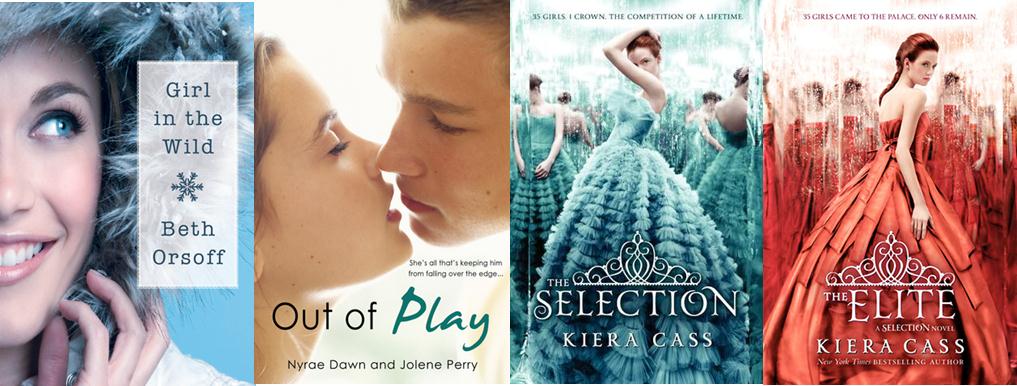
Girl In The Wild by Beth Orsoff:

What can I say, really?  Southern California working girl goes to Alaska to help the career of her client and boyfriend.  Previously cheating boyfriend does not appreciate/cheats on her again with hot red head.  She ends up with hot Alaskan scientist.  It’s predictable, and yet this one had a few twists.

The island in Alaska that the gal spends her time on is remote and lacking in amenities.  Most of the book involves cold water, walruses, chartered boats, and tagging animals.  It took me a good long time to figure out who the love interest was, too.  Mostly because he was such an asshole.  The author turned it into a Darcy thing with aplomb, though, where he was friendlier among friends.  Add that to the messages about global warming throughout the book and it was an original-ish take on a very old model.

The only problem I had with it was the love interest.  While he ends up a likable guy in the end, some of the things he does in the beginning are outright harassment.  She likes it, even though she says no.  He keeps harassing.  It sent up all sorts of anti-feminist alarms in my head, but didn’t quite kill my enjoyment of the novel.  I left with the impression that, while she maybe wasn’t in a dream relationship at the end, she was in a better one than she had left behind.

I’m not saying it will win a Pulitzer or anything, but it was fun.  If you like the chick lit thing, I bet you will like this too.  It gets four Beach Smut stars.

Out of Play by Nyrae Dawn and Jolene Perry:

This romance novel is shelved in Young Adult, and it also takes place in Alaska.  What’s with all the books about Alaska lately? I promise it was a total accident that I picked this one up at the same time as the other.

Teen angst aside, I really loved this novel.  The plot is simple, but so complex at the same time.  Bad ass hockey star girl meets undercover rock star boy with drug problem.  She is busy being awesome, and taking care of her ailing grandfather while her mother is at work all the time.  He is not so busy trying to get clean before he gets kicked out of the band and/or dies of an overdose.  Her father died a long time ago when a pill-popper ran him off the road.  Gramps is the only one he can open up to, and Gramps has the beginning stages of Alzheimer’s.  Druggie folks from the old life are still in touch.  She thinks she has a crush on her best friend, another hockey player.  There is snow machining and lots of hockey, drums, tattoos, making out, cold weather, hot tubs, fancy classic cars, and making out.  Really, what else do you need?

The novel was written by two authors. One wrote the gal and one wrote the guy.  It was nice getting inside both of their heads.  Sometimes I get confused about who is speaking when books are like this, but I was never confused in this one.  Their voices were each so distinct.  This is exactly what I look for in a romance novel.  It gets five Beach Smut stars.

The Selection/The Elite by Kiera Cass:  

The first and second novels of a trilogy (the 3rd doesn’t come out until May), and also Young Adult. Basically, a poor girl gets selected to join a televised contest at the palace.  Winner gets to marry the prince, “Bachelor” style.   There’s a love triangle with a former boyfriend thrown in for good measure.

Despite the adverbs, I found myself enjoying the book a lot.  It’s silly concept is elevated by the real problems the fictional country is facing.  Not only are people starving in the streets because of the rigid caste system (including the main character, America’s family), but there are rebels who are intent on breaking into the palace and possibly assassinating the royal family.  At times, it’s outright scary.  America is spunky and forthright with the prince that she’s only here for the money the government is paying her family for her participation.  When she falls for the prince despite herself, I was definitely rooting for her, and for them.  Balls, dinners, moonlit walks, and fantasy wardrobes are all there for the sort who like that thing.  Yes, I’m totally one of them.

Cass does a good job throughout the novels planting plot seeds and keeping the reader hooked all the way through the series.  It’s only a bit maddening that the novels aren’t really complete – cliff hanger endings all so you’ll read the next post-haste.  I hardly blame her, but I think I would also have been upset about having to wait so long if the third (and last) book wasn’t coming out fairly soon.  I’ll let you decide if that’s a compliment or not.

If you’ve ever worn a “team Peeta” or “team Gale” t-shirt or have an affinity to ball gowns, this book may be for you.  You may want to wait until May, though, so you can devour all three in one sitting.  Five Beach Smut stars, with extra points for multiple novels.

Categories: Fiction | Tags: , , , , , , , , , , | Leave a comment

Where Do You Get Your Ideas?

IMG_20130810_224123

One of my favorite things in the world is to read what people who write for a career have to say about the writing process.  If anyone can explain it, they can.  My favorite subject is always the question “where do you get your ideas from?”  Anyone who has ever done any writing knows that this question is impossible to answer.  It doesn’t matter how amateur your actual writing is, your ideas always originate from the same place.  Sure, you can cobble something together about articles and prior influences.  But really, it’s like asking someone why they dreamed of popcorn last night.  Maybe it was the movie you watched before bed, but who really knows?

I hadn’t spent much time on Robin McKinley’s website until this week, and she has a great answer to that question.  You can read the whole thing here: http://www.robinmckinley.com/faq/faq.php?q_id=5 but essentially she says that having ideas is like picking up pebbles in the dark and then picking up a puppy.  You know immediately that the thing in your hands is something else, and something rather more than what you’ve picked up previously.  The puppy is a story.  Like I said, I love this explanation.  It almost expresses how I get my ideas.

The problem is that, for me, it is not nearly as simple as this.  It is like fumbling around in the darkness picking up the pebbles of ideas, and then suddenly you grab a pair of furry legs, and a few velvet ears, a wagging tail then the warm, soft body.  Eventually, among all the other pebbles I’ve picked up at the same time, I realize that I can put this all together and it becomes a puppy.  But it doesn’t start out as a full puppy I pull from the dark.  I know I have something different, but it isn’t always clear what parts belong to what until I sit down and try to piece them all together.  And some things are only rather mossy rocks.  And sometimes I’ve pulled the parts for a puppy and the parts for a squirrel, and have to sort that out as well.  And sometimes there are more than two.  I’d say it’s like juggling, but that would be adding another metaphor into this already cobbled mix.

The last part of this whole problem is that I never know how much the puppy will grow.  I don’t really know what I have until I write it down.  Is it a Pug of a short story?  Is it a Newfoundland of a novel? Is it a viable, healthy dog or does it have kennel cough that will never be cured?  Do I have the skills to care for and feed this dog, or do I need to go and take some writing classes and learn what to feed it before attempting to put it on paper and give it a home?

Writing is such a nebulous thing.  That’s probably why people resort to metaphor and cliché to explain it.  There has to be something more concrete out there, though.  I’ll be searching for it until I find it but my guess is that I never will.  In the mean time, I suppose I offer (rather convoluted) metaphor myself.

Categories: Fiction, Writing | Tags: , , , , , , | Leave a comment

Noir

Posting more fiction, because why not?  Also a candidate for inclusion in the Grad portfolio, but who knows.
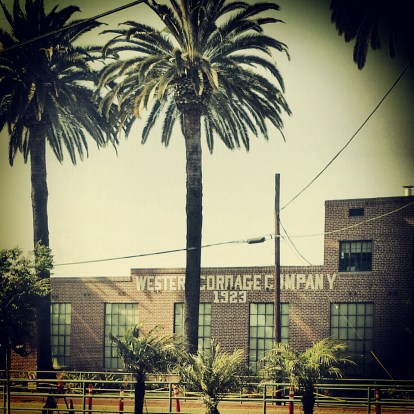
IMG_20130410_161102 (1)

White Envelope:

He was waiting outside for me in a pool of streetlight as I walked out of the Times building: a tall drink of water in a pinstriped suit, fedora perched cockeyed across his forehead.  He stepped out of the light toward me.  The pool of yellow slid off his shoulders like water, and I felt that there was something so familiar about this man.

“You’re Joyce Cummings,” he said.

“I’m tired, is what I am,” I said.  I tucked my purse under my shoulder, pulled on my gloves and tried not to feel the weariness of the press conference this morning; the mayor in behind the podium, teetering in the heat until he collapsed on the stage.  The feedback of the microphone as it fell.  The frantic hours afterward on the phone to the hospital, begging for news.

“Well I’m Glenn Baker, and I’m a fan.” He stuck out his hand, “The work you did on the ‘32 Summer Olympics was art.”

I placed my gloved hand in his, and we shook.  “Thank you very much,” I said, and smiled.

“Let me take you for a drink?” he asked.

I tipped my head back to look at him and realized that, even in heels, the top of my curled coif only came to his chin.  His eyes were deep as a glass of whiskey, and the pinstripes of his pants hugged him well.

“Why don’t you take me out for a drink,” I said. Maybe if he hadn’t had that Hollywood smile I wouldn’t have said it.

“I know a place just down the street from here.”

“Then lead the way, Mr. Baker.”

The sign out front said The Florentine, and it was swanky inside.  A bar full of glass bottles lined the left wall and tiny, leather booths the right.  Chandeliers hung over each table, their light reflected in the mirrored walls behind them.  Gold drapes swished over every door, and clouds of cigarette smoke billowed. The place was packed with men in suits. A few women in tight dresses and too much makeup speckled the crowd, giggling over their drinks.  In the dim light, a jazz combo began to play something slow.

“I’m underdressed,” I said over the noise, looking down at my brown tweed skirt.

“You’re perfect,” he said.  “There’s a table in the back, follow me.”

We picked our way through the crowd to a booth in the corner.  It was quieter there.  I tucked my purse and hat next to my feet.  When I looked up, a girl in a low cut cocktail dress appeared at the edge of our table.

“What can I get you, Mr. – ” she said.

“– I’ll have a Gibson,” he broke in, “and the lady will have…”

“The lady will have the same,” I said.

Baker raised his eyebrow.

“I’ve been tossing them back with the newspaper boys for longer than you’d imagine,” I said.  “I’m used to being the only skirt in a room full of pants.  Now let’s cut to it.  Why did you really ask me out tonight?”

“I told you, I’m a fan,” he said.

I shook my head. “Nobody’s just a fan.  Maybe you liked my picture too.  Or maybe you think I have information about something and you want it.  Sure, you’re a fan.  But regular fans don’t show up at the office and ask to take a girl out.”

“So I’m not a regular fan,” he said.

“Then what kind of a fan are you?”

“The needy kind, I guess.” He rubbed the back of his neck.  “Listen, Miss Cummings, you’re right.  I like your work, but I’m also in trouble.  You seemed like the kind of woman who would be willing to help a guy.”

“I’m better at getting myself into trouble than getting others out of it,” I said.

“Look, I didn’t want to do things this way.  Let’s have a nice night, and then you can come back to my place and I’ll explain it all.”

I looked at the concerned crease between his eyes, and at his broad shoulders.  I leaned forward.  “I believe the standard currency for coming back to your place is dinner and a movie.  We can have a nice night, but you’d better tell me here.”

“I didn’t mean…” he said.

“Of course you didn’t, you just weren’t thinking.” I put my hand on his.  “Listen, don’t worry Mr. Baker.  Just tell me, what is it you want to talk about?”

“I don’t know.  I guess let’s talk about you.”

I laughed “I’m not very interesting I’m afraid.  Been wedded to work for years.  I don’t do anything unless there’s a story involved. Men don’t like that very much, so I assume you’re the same.”

“Where did you grow up?” he asked.

“Boring little town thirty miles east of here.  Nothing but orange groves and packing houses for miles,” I said.  “I left as soon as I could, and there’s no story there.  New subject.  Where did you grow up?”

“I guess I’d rather not talk about it,” he said.

The waitress arrived with our drinks.  She placed two martini glasses on the table, and winked at Baker. “You all just let me know if you need anything else!” she said as she turned on her heels and disappeared back into the crowd.

“Look Mr. Baker,” I said, “It’s loud in here.  The sooner you tell me what’s on your mind, the sooner you can stop worrying.  No one will overhear in this din.”

Baker grasped the base of his glass twice, and then raised it to his lips and drank.  The glass wobbled as he set it back on the table.  “I hardly know where to start,” he said.

“Wherever you’d like,” I replied.  The sweet aroma of a good story hung thick in the air. I could taste it.

“I guess it all started with Ida,” he said, “or rather, it started when Ida and I ended, and I found out how many debts she had racked up.” He took another sip from his drink.  “She had to have that mink coat, y’know, and the fancy dinners all over town.  And the gilded hotel rooms she visited with other men.  I thought we were in love, but she just up and left me with the bills one morning and it was then I saw who she was.  Pretty clear.  But by then I was up to my neck. I borrowed the money to pay the debts from people I shouldn’t have. It was the worst mistake of my life.”

I waited, watching the condensation gather on my glass.

“I have money now, plenty of it,” he continued, “but they won’t let me pay.  I’ve been performing little tasks for them for years.  Acquiring things. You know what I’m saying?”

“And where do I come in?” I said.

“You have my final payment.  At least, that’s what they said.  I don’t know how they would know.  A little white envelope the Mayor handed you this afternoon.”

A shot of adrenaline rushed through my veins like iced gin.  The sweltering heat of the afternoon; the Mayor collapsing on the hot pavement, foam gurgling from his mouth.  In the chaos, I was sure no one had seen me tuck the white envelope into my own jacket.  I didn’t tell anyone I had it.  I learned a long time ago not to let anyone know what you’ve got until the story is written.  They’ll just pat you on the head, call you darling, and suggest that it’s too dangerous.  Billy should take it from here.  I don’t know how Baker knew anything about the envelope.

“Who are ‘they’?” I asked.

“I don’t know.  If I knew, maybe I’d be outta this mess.”

“And what’s in the envelope?”

“I was hoping you could tell me,” he said.

“Presuming I have it.”

“Well, yes.  Presuming you have it.”

“And presuming I’ve opened it, too.”

He cleared his throat.  “Well yes, that too.”

“I can’t help you,” I said.

He downed the rest of his drink in a single gulp and winced. “Yes, I thought you might say that.  I’m afraid I don’t have anything clever worked out in response.  Look, Miss Cummings, it’s a matter of life and death for me.  These guys don’t play around, and if I don’t cough up the envelope they’ll take it out of my flesh instead.  I’m not asking you to hand over the envelope this second.  I’m not even asking if you have it.  I’m just asking you not to refuse me help until you’ve thought it over.”

“I’m sorry, Mr. Baker, you seem like a nice enough fellow,” I said.  I swirled the straw around in my drink. “But I can’t help you unless you help me.”

“Help you how?” he said.

I leaned forward. “The envelope is in code; a jumble of nonsense words.  I can’t read it.  I need a scoop to bring to the boys at the office.  I haven’t had a juicy one in months.  You get me the code, the letter is yours.”

A faint clapping filled the bar as the jazz combo switched to a new song.  I watched the surge of people moving through the bar.  Men breathed plumes of smoke into the air.  One held cigarette and high ball in the same hand, to wrap the other around a girl’s waist and whisper in her ear.  Serving girls distributed sloshing glasses of alcohol throughout the room.  Light glinted off the saxophone as the performers swayed to their music.

“Pardon, then.  I should have known,” he said.

“Known what?” I asked.

“I recognized that look in your eye right away, the cold behind your baby blues. As soon as you get what you need from me, you’ll leave me twisting, Doll.”

“I’m sorry Mr. Baker,” I shrugged.

“You’re not sorry,” he hissed.  “Lies don’t become you, Miss Cummings.”

I took a gulp of my drink.  It was sour as it trickled down my throat.

He laughed, dry and mirthless.  “You have me trapped just where you want me.  But I’ll be damned before I just hand it over.  If I get you the code, you produce the letter, and we translate it together.”

I took another sip from the martini glass before I reached into my purse and pulled out a slender cigarette.  I brought it to my lips.  He found a lighter in his pocket, and held the flame.  I pulled the smoke into my lungs and let it out in a slim, curling tendril.

I thought of the envelope tucked into the front of my jacket pocket. It would be so easy to lift it out and hand it to him, to forget I ever saw it.  He sat slumped in the booth beside me, lines creasing his handsome face, staring into the distance.  He swallowed hard.

I stabbed the end of the cigarette into my drink, and picked up my purse and hat.  “I should be going.  Walk me out?”

“Whatever you say, Miss Cummings,” he said.  He dropped some money on the table and we picked our way out of the crowded bar.  The night had turned cool, a crisp breeze pushing aside the heat of the day.

“Look,” he said, “Don’t go home angry.  I got a little hot in there, I’m a heel.” He grabbed my hand and I let him take it.

“You are most definitely a heel,” I said, “and you were probably right. About all of it.”

We walked a ways down the street to a row of apartments. It was quiet and the moon was bright.  A car drove past, and the headlights made the world of shadows spin around us.  We stopped walking.

“You’re beautiful, Joyce, you know that?” he whispered, pushing a curl away from my cheek.  He kissed my cheek, and his lips were soft.  The blood rushed in my ears.  My heart hammered.  I was alive.

It seemed like ages had passed when he pulled away, but it was only seconds.  He cleared his throat and rubbed the back of his neck.  “I shouldn’t have…”

“Let’s stop with the apologies,” I said.  “You know what I want from you .  Code for letter.  Best of luck, Mr. Baker.”  I walked away, feeling the light of the streetlight slip over my shoulders this time.  I knew that if I had been a different girl, that kiss might have melted me.   Still, something in me wanted to grip that letter tighter than the mayor had.

#

            He looked better than I remembered when he slid out of the shadows again later that week, and that air of deep familiarity struck me again.  There was a cut across his cheekbone now, and it gave him a rakish air that fit with his easy manner.

I smiled.  “I presume this means…”

“I have what you asked me for,” he said.

“Mr. Baker, you are my hero,” I said.  He had delivered on his promise.

“And if you have the letter with you, then you’re mine.  I don’t think I have much time and I might have been followed.  We can’t go back to the bar.  We have to go somewhere else, somewhere not public.  I know you said you wouldn’t come back to my place…” he trailed off.

I couldn’t invite him into the news room.  Not until I had the story wrapped up, with my name on the byline.  “We’ll go to my apartment,” I said.

We strode over the sidewalk together, headlights of cars wheeling past and casting circling shadows through the night.   I turned the key on the wooden door as he waited in the palm tree covered courtyard.  We stepped into my stark living room; only a bookshelf, a yellow floral couch, and a bare wooden table to break up the white stucco walls.  I tossed my things on the table and turned to Baker.

“Well,” he said, “you said you had it.”

“You first.”

He pulled a receipt from his hip pocket.  Black scrawl covered the back of it.

I reached into the inside of my coat.  The white envelope glowed in the darkness between us.  The letter crinkled as I unfolded it.  I spread it on the kitchen table and began to translate.

“Evidence that Franco Bianchi’s gang is blackmailing the city council is taped to the bottom drawer in my office.  Don’t tell the police, they’re on his side.” it said.

I closed my notebook and stood.  This was bigger than anything I’d ever had before, and the filing deadline for the paper was early.  I grabbed my hat and gloves absently, and walked toward the door.

“I have to get back to the office,” I said.

“Miss Cummings,” Baker said, and I turned.  “My envelope?”

I held it out to him.  My thumb and finger gripped it where the prints of the mayor had crinkled the corner.

He took the envelope from my hand as if it would shatter at the slightest touch.  A slow smile spread across his face.  The creases in his forehead smoothed.  He tucked it into the inner pocket of his own jacket.

When he removed his hand from the pocket, it was not empty.  Something glinted silver in the moonlight, and I saw that it was a small pistol with a wooden handle.

“Mr. Baker,” I said.  I grabbed the back of one of the ladder back chairs, moving my body behind the thin rails.  It would be no shield at all, I realized.

“If I’m going to kill you, we should be on a first name basis.  Don’t you think, Joyce?”

The silence filled my apartment.  My mouth was dry and I swallowed.  The back door was behind him.  The front door was too far to outrun a practiced trigger finger and a slick silver bullet.  I stood, still and tall.

“Fine, Glenn,” I said.  I willed my voice not to waver.

“Most people call me Franco,” he said.

In that instant in my living room I realized where I knew him; in the dim light, I saw his face as it appeared in the black and white pages of the paper.

“Franco Bianchi,” I whispered.

“You really are beautiful, Doll,” he said, “but I can’t have any witnesses, especially not witnesses from the press.  And I can’t let you write that story about the mayor.”

He pushed down the brim of his hat and fired.  The world spun, and my back hit the slick wood of the apartment floor.  I thought of the mayor and the way he toppled from the podium.  There was no one to rush to my side here, no one I could give a small white envelope.  The story would die with me.  I had been a fool, too eager for a byline and too trusting of familiarity.  Something warm, dark, and sticky seeped through my tweed jacket and into my hair.  I had tried to be the hard boiled reporter, and in the end I was still nothing but an easy mark.  The sound of the lock clicked and I realized I was alone.  I stared at the pattern of swirling stucco on the ceiling, watching the pattern fade and focus, and then fade out again.

Categories: Fiction | Tags: , , , , , | Leave a comment

Fall Reading List

IMG_20131101_075528

In the interests of being fair to summer, I’m posting my Fall reading list complete with short review of everything I read.  I know it’s December now and WAY past Fall, but the fall semester just ended here, so I consider myself legit.  Also, books make GREAT Christmas presents and there’s still time to order stuff from Amazon.  Barely.  I should really get on that…

So anyway, here’s everything I’ve read since the semester started in late August:

  1. The Hero and The Crown – Robin McKinley (I’ve read about gals that I want to be, but never that I wanted to watch like I want to watch Aerin.  Fascinating main character, kick ass story.)
  2. Chalice – Robin McKinley (I just want to move into this world and tend bees.  Can I?)
  3. The 4:50 From Paddington – Agatha Christie (Just as I’m certain, CERTAIN, I know who did it, it turns out to be someone I didn’t want to consider.)
  4. The Name of The Wind – Patrick Rothfuss (Although well written, it reads like a D&D campaign.  I prefer to play them, not read about them.  The writing is such that I’ll finish, though.)
  5. Percy Jackson and the Lightening Thief – Rick Riorden (This reminded me a lot of Going Bovine, but Going Bovine was much better written.  Not bad, not the best of its kind.)
  6. The Big Drop: Homecoming – Ryan Gattis (Nods to Chandler and Fante, but is totally its own thing.  The best argument for character driven narrative I’ve ever read.)
  7. Let’s Pretend This Never Happened – Jenny Lawson (Reads just like her blog, which I can’t read in public because I can’t stop laughing in inappropriate ways.)
  8. Midnight In Austenland – Shannon Hale (A re-read.  For the third time.  This is likely to become one of those books I can’t read anymore because I’ve memorized too much of it.)
  9. Kneenock Rise – Natalie Babbit (My favorite in fourth grade. It goes too fast now, but reading it out loud helps, and also made me notice her foreshadowing and savor her word choice.)
  10. Story Book High, Book 1 – Shannon Hale (yes, I know… a book produced by Mattel?  But Shannon Hale.  I was torn.  It wasn’t bad.  At times it was even hilarious, if you like puns. I do.)
  11. Aunt Maria – Diana Wynne Jones (You read, and you think ‘what the hell is happening?’ but all parts fall into place by the end.  This is why I love her. Also, because Aunt Maria is creepy.)
  12. Self Reliance – Ralph Waldo Emerson (This “updated” version is really reduced to a quaint quote book by the new stuff interspersed between Emerson’s essays. Doesn’t do him justice.)
  13. The Wave in the Mind – Ursula K. LeGuin (I loved her essays on growing up in 1930’s California and on reading, and then I read her essays on rhythm in writing and fell in love more.)
  14. Fortunately, The Milk – Neil Gaiman (Wumpires and a time-traveling stegosaurus?  Yes please.)
  15. Let’s Get Visible – David Gaughran (Because I’m thinking of self-publishing.  Still undecided…)
  16. Johnny Tremain – Esther Forbes (In the beginning Johnny is an asshat, and in the end he’s a sap, but between is good.  Plot is very coincidental, though.)
  17. The Things They Carried – Tim O’Brien (So well written, and just full of the fear of war.)
  18. Persuasion – Jane Austen (A re-read, and a book I love.)
  19. Author, Publisher, Entrepreneur – Guy Kawasaki and Shawn Welch (This is the book that made me decide NOT to self-publish.  I’m not that cool.  I don’t have the mad skillzorz it would take to do it well.  I suppose it’s good that I found this out early.)
  20. Helen of Pasadena – Lian Dolan (total smut in the best way, and extra fun because I know some of the main locations.)
  21. The Kings and Queens of Roam – Daniel Wallace (Heartbreaking and fable-like.  It’s beautiful, but I’m not sure I’ll finish it.  I’m not sure I can take it.)
  22. Candyfreak – Steve Almond (I think I might be in love with this man… mostly because he’s even more of a sugar freak than I am, but also because he’s hilarious.  Don’t tell Brian – although he probably suspects.  I’ve been reading him snippets of the book for days.)

I also just bought Consider The Lobster and Elizabeth the First Wife, but I’ll finish those after the requisite deadline for reporting what I’ve read.  Those will be the first on the Winter Interterm reading list.  I’m very excited, especially about Elizabeth the First Wife which promises to be extra smutty.

Categories: Fiction, Writing | Tags: , , , , , , , , , , , , , , , , , , | Leave a comment

Blog at WordPress.com.